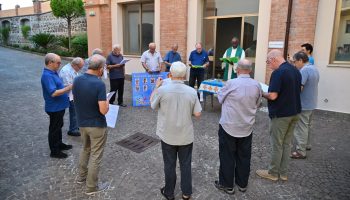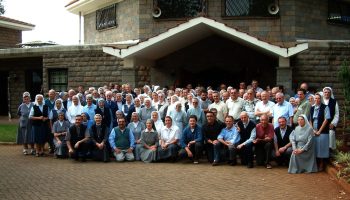
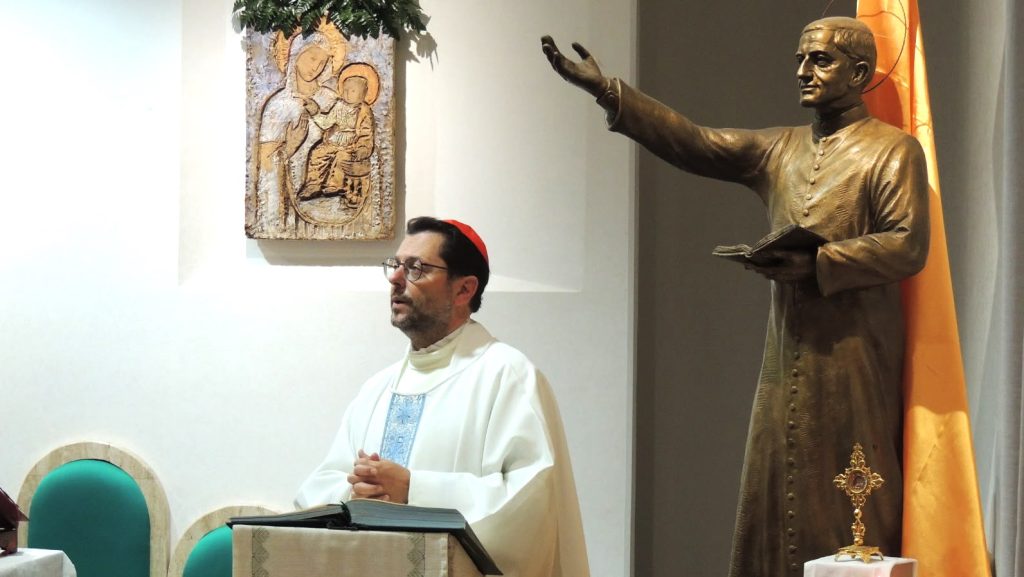
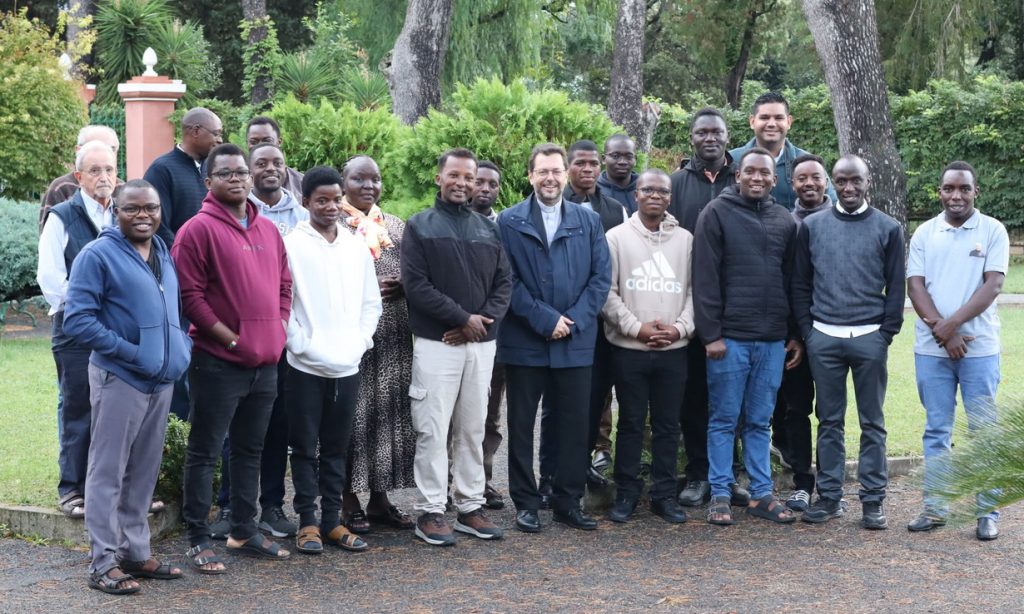
On Saturday, October 10, the Consolata missionary seminarians of Bravetta community shared a moment of encounter, prayer and fellowship with Cardinal Giorgio Marengo, IMC, Apostolic Prefect of Ulaanbaatar in Mongolia.
By Jhonny González *
For the cardinal, the visit also had a special meaning: he was returning to the seminary where he spent his years of theological study during his missionary formation. It was a fine opportunity to share with the young men his experience of consecrated life and mission.
The relationship with Jesus at the heart of formation
In his homily at the Holy Mass celebrated in the seminary chapel, the cardinal urged the seminarians to place a personal relationship with Jesus Christ at the center of their lives. Before thinking about the places where they will be sent and the activities they will carry out in mission, it is essential to let themselves be transformed by the Lord through prayer and spiritual life.
“The most important thing is to grow in a personal relationship with the Lord Jesus, to be one with Him and to let Him draw our hearts,” the cardinal stressed.
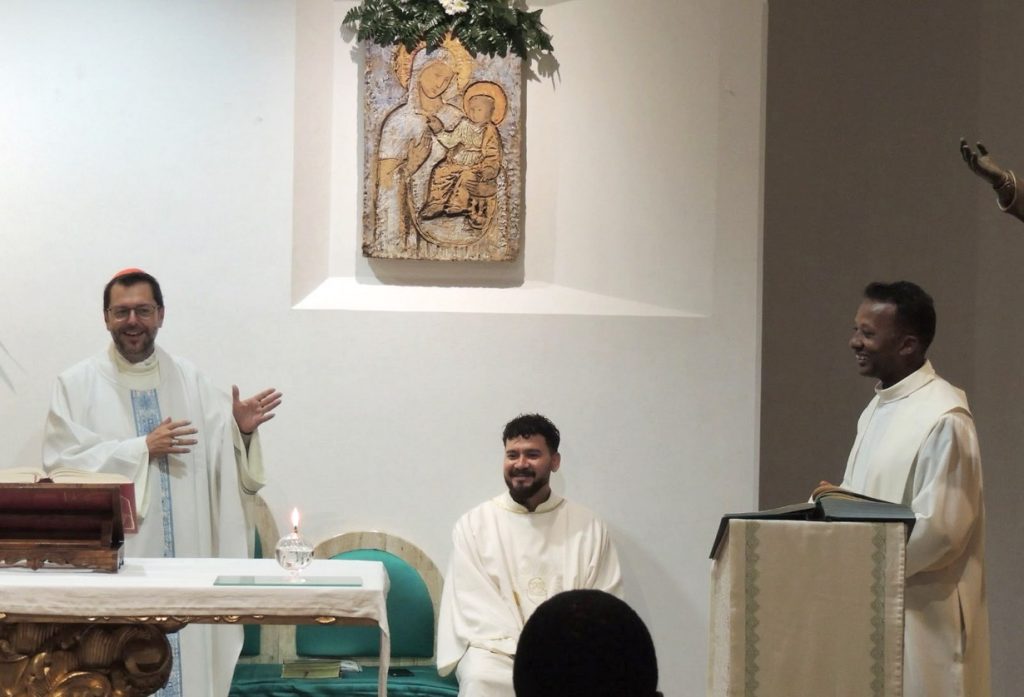
The spiritual life, he explained, is what sustains the missionary in the difficulties and challenges of his vocation. Mission can lead him to places and situations very different from those imagined during the years of formation. He will need to learn new languages, get to know different cultures, adapt to new realities and build relationships with people of diverse backgrounds.
For this reason, the future missionary is called to be available, flexible and ready to accept the will of God.
The Eucharist, source of missionary life
The cardinal also drew the seminarians’ attention to the importance of the Eucharist, through which the Christian is called to be transformed into Christ.
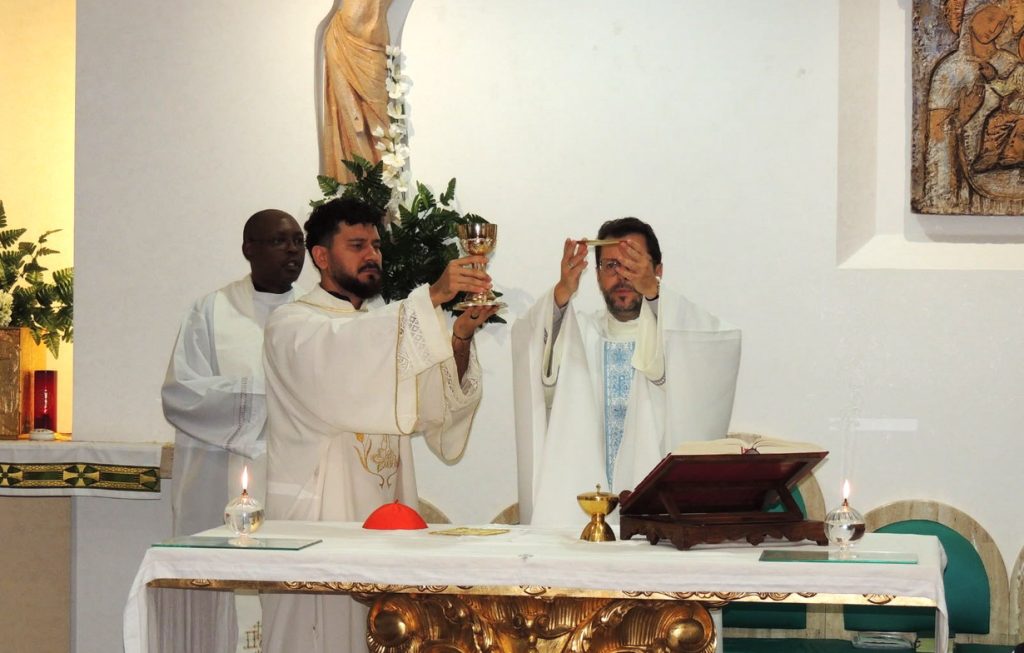
Even when mission takes place in very small communities, without large structures or with only a few people attending celebrations, the Eucharist remains the center of the missionary’s life. What matters is not the size of the works but the willingness to serve and to bear witness to Christ in every situation.
Mary was presented as a model of the missionary vocation: she welcomed the Lord into her life and gave Him to the world. In the same way, the missionary is called to welcome Jesus into his heart and to make Him present through his words, choices and daily service.
The cardinal’s concluding message was an invitation to live each day of formation as a journey of interior transformation: to let oneself be transformed in Christ in order to become His instruments and bring the Gospel to those who do not yet know it.
An encounter of fraternity and encouragement
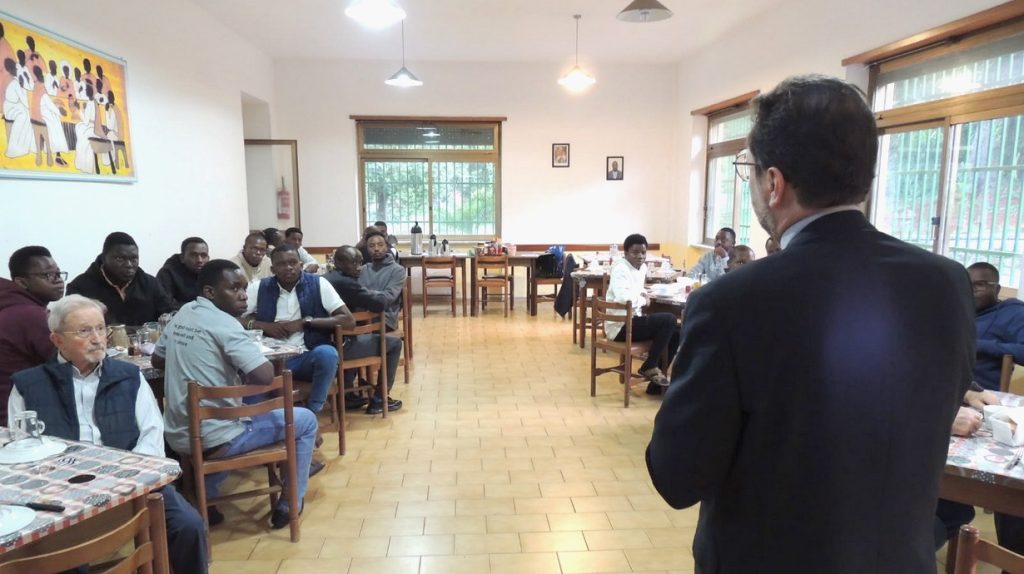
After Mass, the gathering continued with a time of sharing and questions. The seminarians were able to explore several aspects of mission, first evangelization in intercultural contexts, interreligious dialogue, and the responsible management of missionary projects.
Mission where Christ is still little known
Sharing his experience in Mongolia, where he has served as a missionary for over twenty years, Cardinal Marengo described the reality of a young Church growing in a cultural and religious context very different from the European one.
The mission of first evangelization requires patience, listening and the ability to accompany the growth of the Christian community. It is not a matter of reproducing familiar models, but of getting to know the local reality and seeking, together with the people, the most suitable ways to proclaim the Gospel.
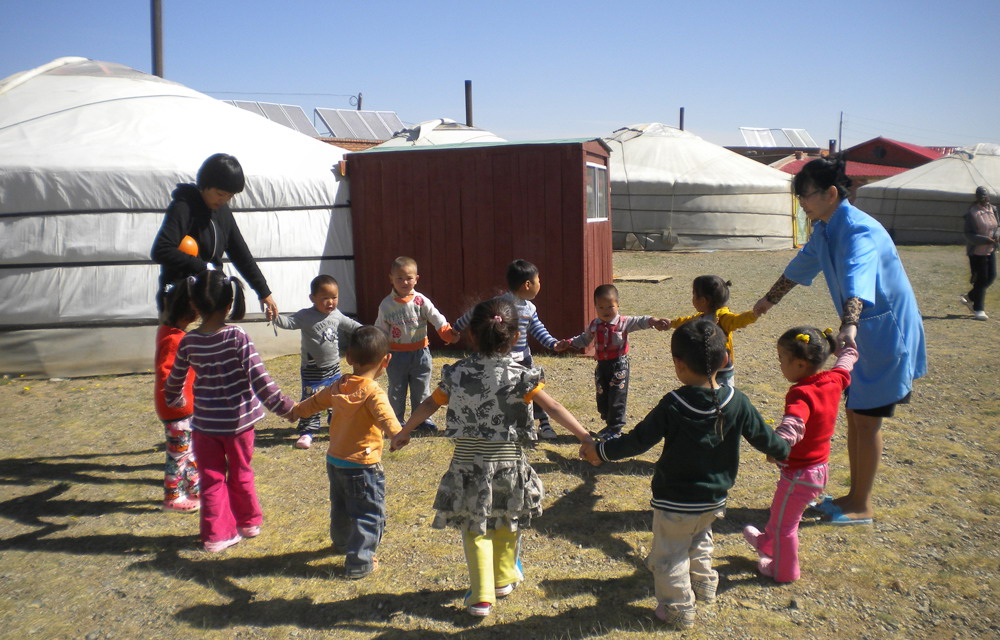
Cardinal Giorgio Marengo recalled that missionaries come from different countries and cultures, and that each brings his own ecclesial experience. It is important, however, not to impose one’s own model, but to learn to dialogue with the culture of the people to whom one is sent.
Interreligious dialogue as an opportunity for encounter
Another important theme was interreligious dialogue, particularly significant in Mongolia, where Buddhism is a religious tradition of great importance.
According to the cardinal, dialogue does not replace evangelization, but allows Christians to bear witness to their faith while respecting the convictions of others. Meeting people of different religions means getting to know other traditions, learning from their example and discovering new possibilities for collaboration.
Mutual respect and cooperation can help show that religions are not a threat to society, but can be a resource for peace and the common good.
A return to missionary roots
What made this return even more special was a surprise prepared by the seminarians: a poster with several photographs of Cardinal Marengo from the time when he was a young seminarian right there at Bravetta.
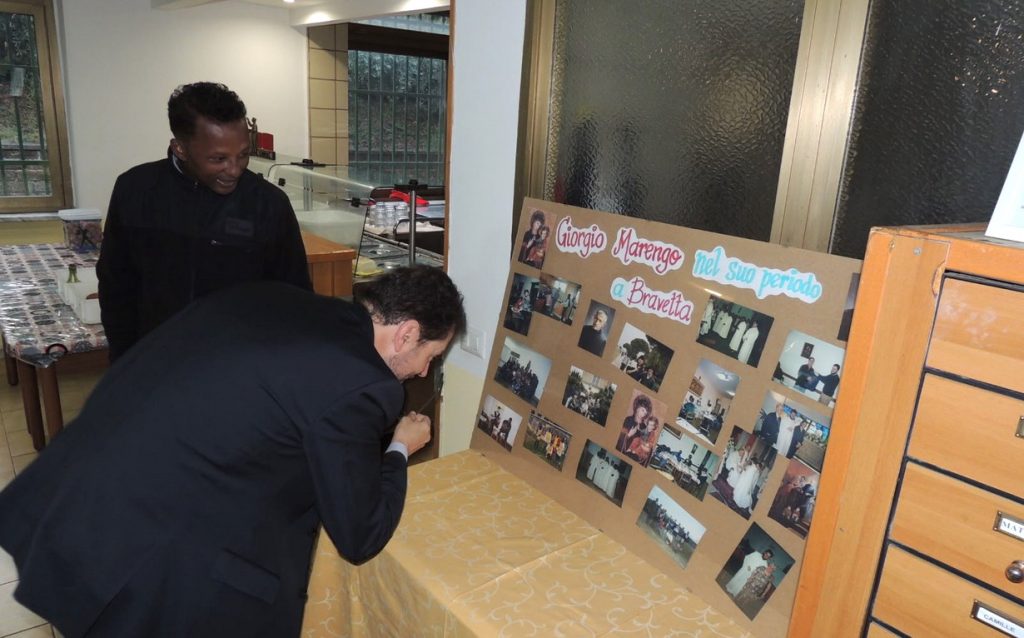
A simple and affectionate gesture, it stirred emotion, taking him back in time and recalling memories of his years of formation. It was a sign of fraternity that made the bond with the community, and with the place where his missionary vocation matured, even more evident.
At the end of the gathering, the seminarians expressed their gratitude to Cardinal Marengo for his availability and for the testimony he shared. His presence was an encouragement for the young men in formation, showing how the path lived in the seminary can become, over time, a service to the Church and to the peoples of the world.
In Rome, from October 7 to 14, the cardinal is taking part in the Pope’s meeting with the heads of the Eastern Churches and the presidents of the Episcopal Conferences, on the tenth anniversary of the post-synodal apostolic exhortation *Amoris Laetitia*, to reflect on the theme: “Proclaiming the Gospel with Families Today.”
* Jhonny González, IMC, Venezuelan seminarian, International Theological Seminary of Bravetta, Rome.