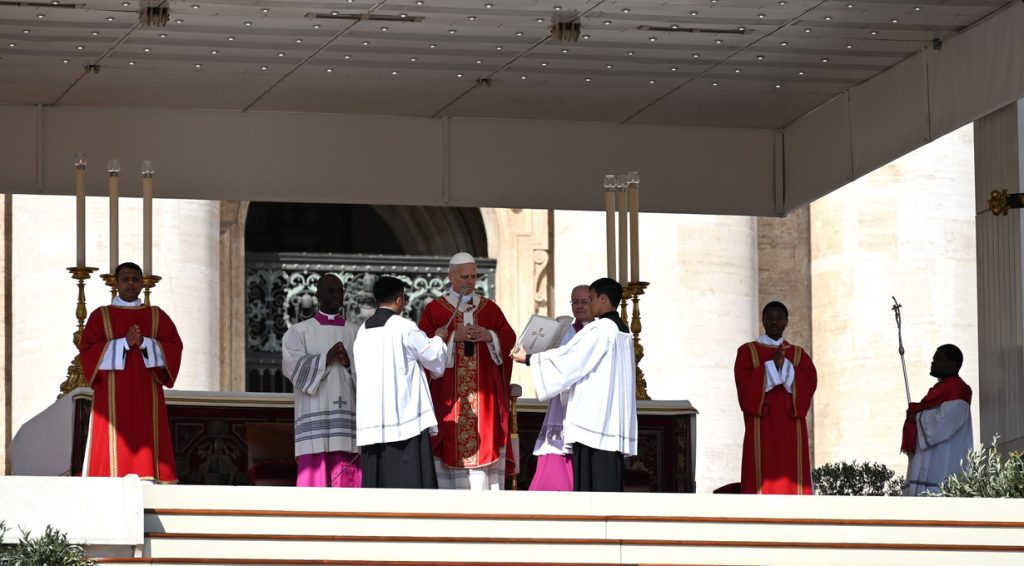
In his homily at Palm Sunday Mass, the Pope Leo XIV once again made a heartfelt appeal for peace. “This is our God: Jesus, King of Peace. A God who rejects war, whom no one can use to justify war, who does not listen to the prayers of those who wage war and rejects them, saying: ‘Though you multiply your prayers, I will not listen; your hands are full of blood'” (Isaiah 1:15).
By Jaime C. Patias *
May the Prince of Peace “support the peoples wounded by war,” beginning with the Middle East, and other places where war rages, he pointed out during his Angelus.
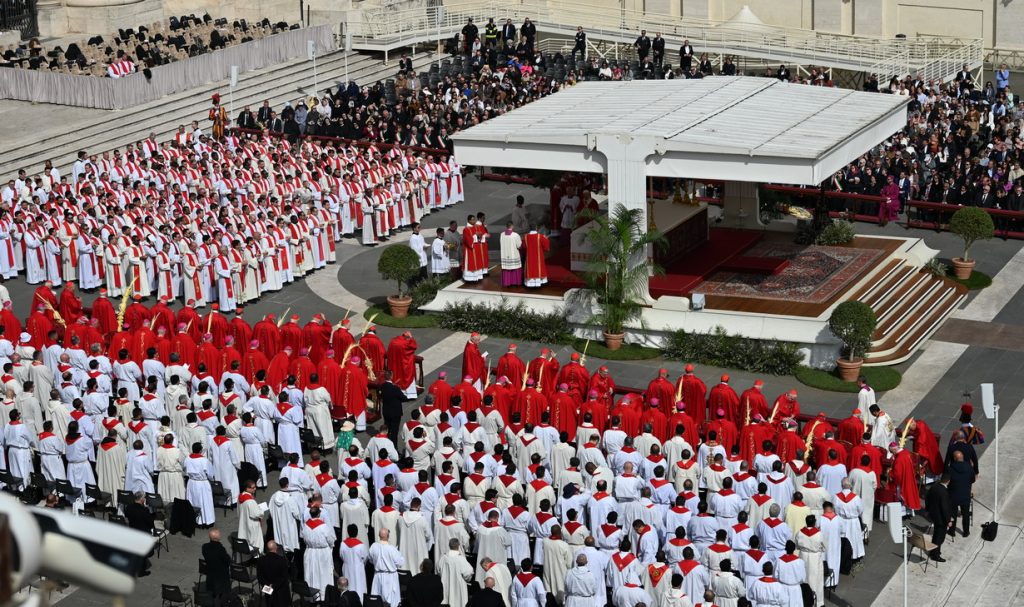
“Christ, King of Peace, cries out again from his cross: God is love! Have mercy! Lay down your weapons, remember that you are brothers!” This appeal concluded the homily at the Mass presided over by Leo XIV in St. Peter’s Square, which marked the beginning of his first Holy Week as a Pope.
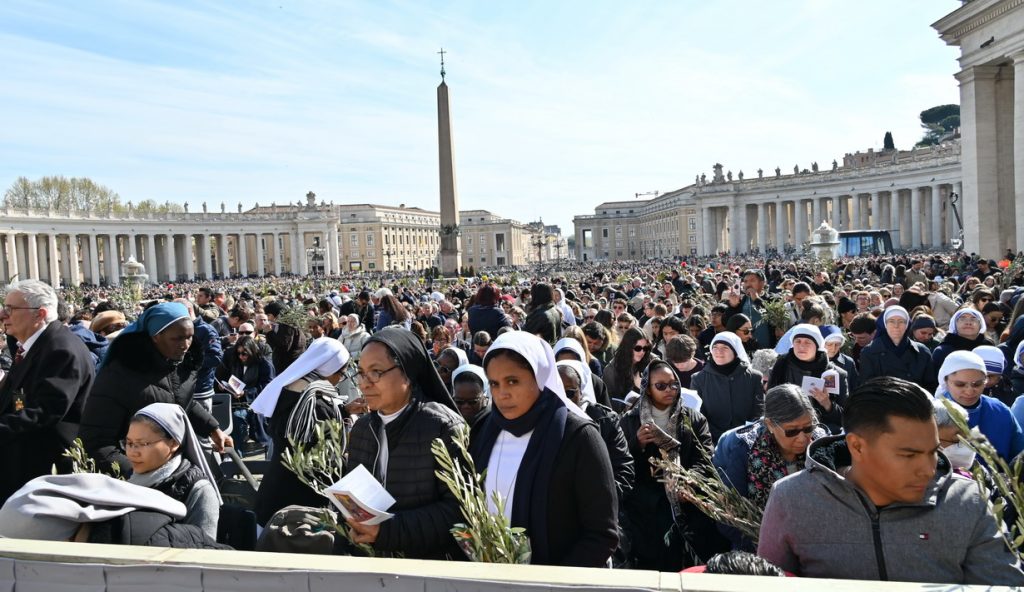
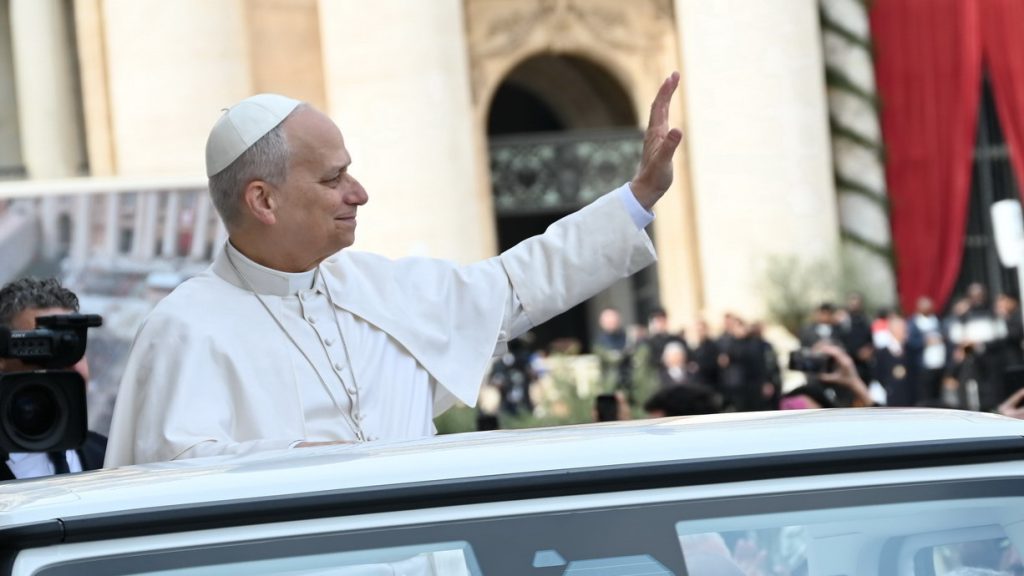
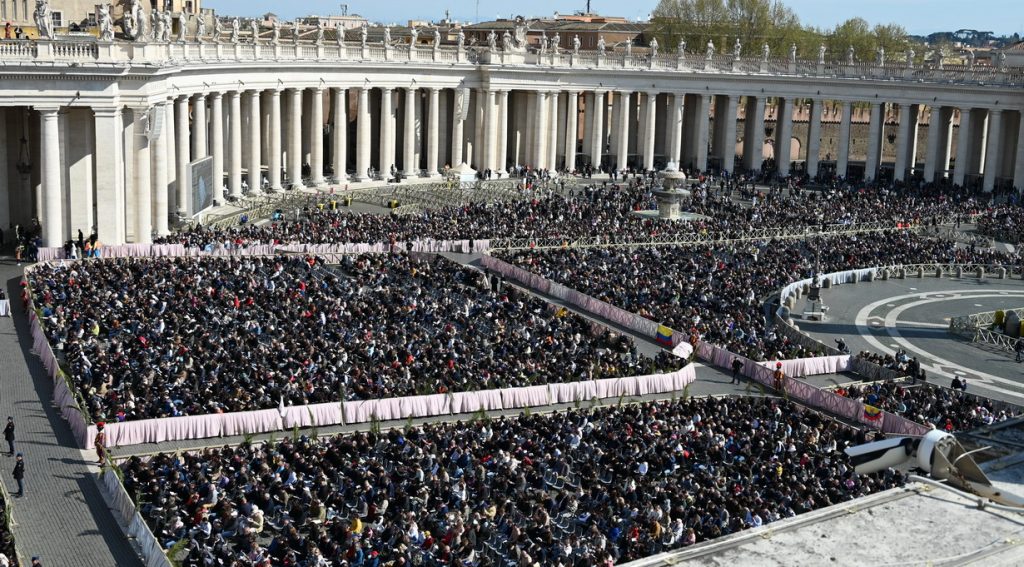
“Let us raise our prayer to the Prince of Peace, that he may support the peoples wounded by war and open concrete paths of reconciliation and peace,” was his other appeal during the Angelus, in a St. Peter’s Square packed with faithful, whom Leo greeted with an extended tour in the Popemobile at the end of the Mass.
“I am close in prayer to the Christians of the Middle East, who are suffering from the consequences of an atrocious conflict and in many cases cannot fully experience the rites of these holy days,” said Leo XIV: “Precisely in these days when the Church contemplates the mystery of the Lord’s Passion, we cannot forget those who today truly participate in his suffering. Their trial challenges the conscience of all.” Then the Pope remembered the seafarers who were victims of war and the migrants who died at sea: “Earth, sky, and sea are created for life and for peace,” he exclaimed.
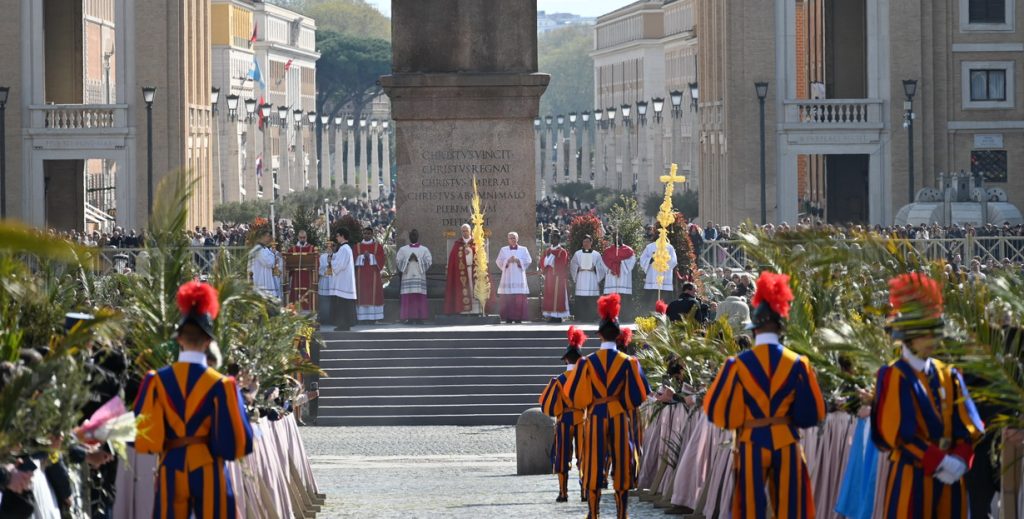
“Let us look to Jesus, who presents himself as the King of Peace, while war is brewing around him,” was the invitation at the beginning of his homily, in which Leo painted a powerful portrait of Jesus walking the Way of the Cross: “Let us stand behind him, let us follow in his footsteps. And walking with him, let us contemplate his passion for humanity, his broken heart, his life that becomes a gift of love.” “He, who remains steadfast in meekness, while others are agitated by violence. He, who offers himself as a caress for humanity, while others take up swords and clubs. He, who is the light of the world, while darkness is about to cover the earth. He, who came to bring life, while the plan to condemn him to death is being fulfilled.”
“As the King of Peace, Jesus wants to reconcile the world in the embrace of the Father and break down every wall that separates us from God and our neighbor, because he is our peace,” the Pontiff assured.
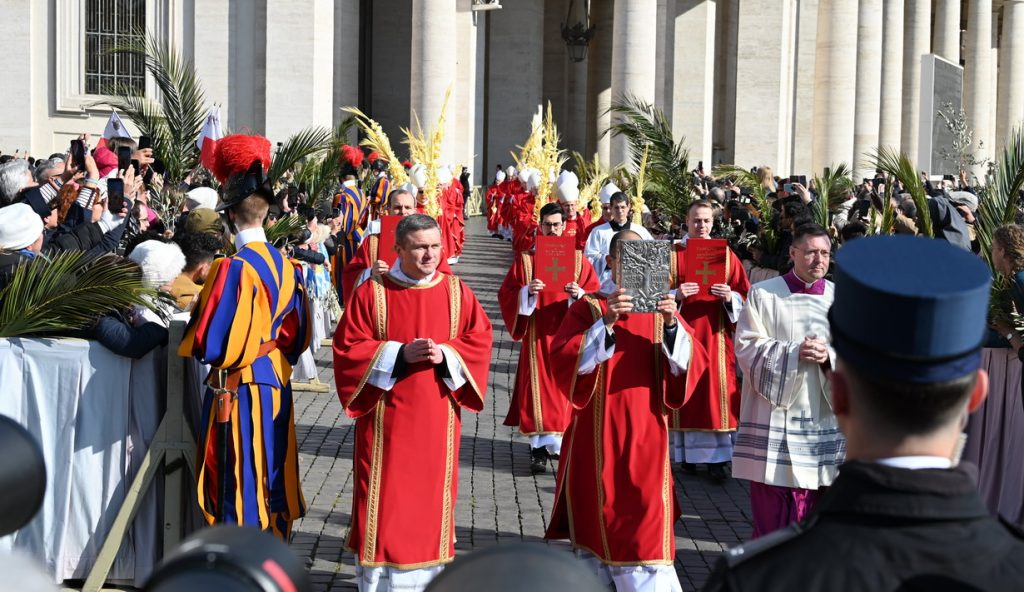
Read below the full text of Pope Leo XIV’s homily
“As Jesus walks the Way of the Cross, we place ourselves behind him, following in his footsteps. As we walk with him, we contemplate his passion for the sake of humanity, his broken heart, and his life as a gift of love.
We turn our gaze to Jesus, who reveals himself as King of Peace, even as war looms around him. He remains steadfast in meekness, while others are stirring up violence. He offers himself to embrace humanity, even as others raise swords and clubs. He is the light of the world, though darkness is about to engulf the earth. He came to bring life, even as plans unfold to condemn him to death.
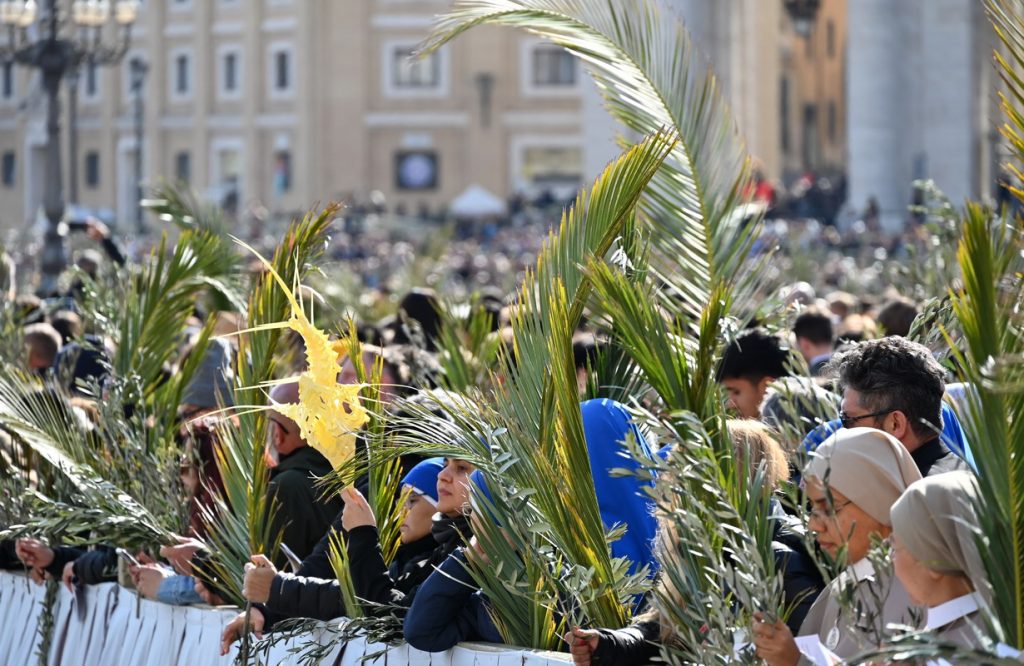
King of Peace. Jesus’ desire is to bring the world into the Father’s arms, tearing down every barrier that separates us from God and from our neighbor, for “He is our peace” (Eph 2:14).
King of Peace. Jesus enters into Jerusalem not upon a horse, but upon a donkey, fulfilling the ancient prophecy that calls for rejoicing at the arrival of the Messiah: “Lo, your king comes to you; triumphant and victorious is he, humble and riding on a donkey, on a colt, the foal of a donkey. He will cut off the chariot from Ephraim and the war-horse from Jerusalem; and the battle bow shall be cut off, and he shall command peace to the nations” (Zech 9:9–10).
King of Peace. When one of his disciples drew his sword to defend him and struck the high priest’s servant, Jesus immediately stopped him, saying: “Put your sword back into its place, for all who take the sword will perish by the sword” (Mt 26:52).
King of Peace. While he was burdened with our sufferings and pierced for our sins, Jesus “did not open his mouth, like a lamb that is led to the slaughter, and like a sheep that before its shearers is silent” (Is 53:7). He did not arm himself, or defend himself, or fight any war. He revealed the gentle face of God, who always rejects violence. Rather than saving himself, he allowed himself to be nailed to the cross, embracing every cross borne in every time and place throughout human history.
Brothers and sisters, this is our God: Jesus, King of Peace, who rejects war, whom no one can use to justify war. He does not listen to the prayers of those who wage war, but rejects them, saying: “Even though you make many prayers, I will not listen: your hands are full of blood” (Is 1:15).
As we set our gaze upon him who was crucified for us, we can see a crucified humanity. In his wounds, we see the hurts of so many women and men today. In his last cry to the Father, we hear the weeping of those who are crushed, who have no hope, who are sick and who are alone. Above all, we hear the painful groans of all those who are oppressed by violence and are victims of war.
Christ, King of Peace, cries out again from his cross: God is love! Have mercy! Lay down your weapons! Remember that you are brothers and sisters!
In the words of the Servant of God, Bishop Tonino Bello, I would like to entrust this cry to Mary Most Holy, who stands beneath the cross of her Son and weeps also at the feet of those who are crucified today:
“Holy Mary, woman of the third day, grant us the certainty that, in spite of all, death will no longer hold sway over us; that the injustices of peoples are numbered; that the flashes of war are fading into the twilight; that the sufferings of the poor are breathing their last. And grant, finally, that the tears of all the victims of violence and pain will soon be dried up like frost beneath the spring sun” (Maria, donna dei nostri giorni).
* Fr. Jaime C. Patias, IMC, Office for Communications, Rome.
Highlights – Palm Sunday Celebration – Vatican News