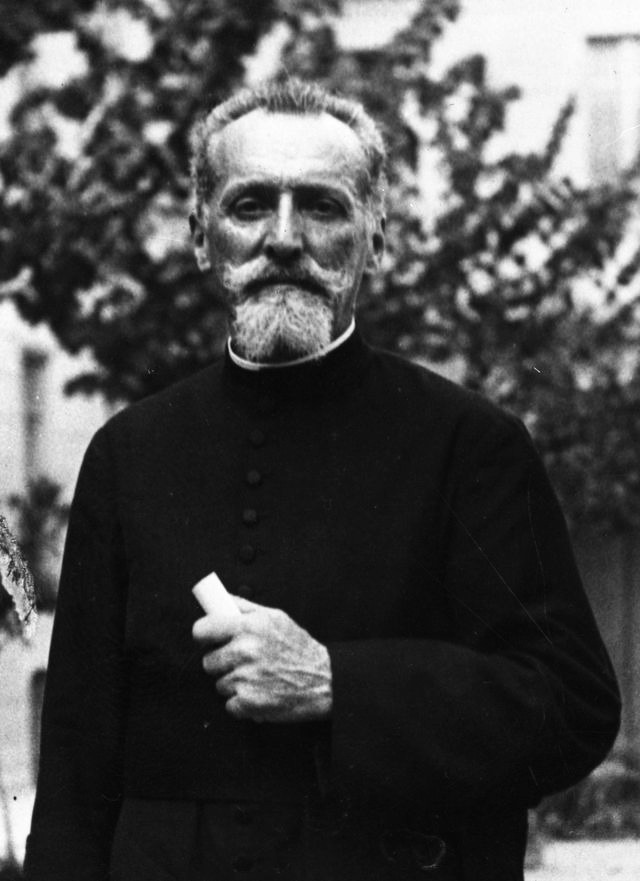
Sixty years ago, on April 27, 1966, the Consolata missionary, Father Gaudenzio Barlassina left us to receive the crown of the apostles. Born in Turin on June 22, 1880, Father Barlassina is a key figure in the history of the Institute and among the protagonists of the first Consolata missionaries in Ethiopia in the twentieth century.
By Ashenafi Yonas Abebe *
His life spanned some of the most complex seasons of the Catholic mission, marked by courageous insights, political difficulties, and a trust that never wavered (Matthew 28:20).
Father Barlassina entered the Consolata Mission Institute while still young (1903), breathing in from the very first its spirit of concreteness, gentleness, faith in Providence, and missionary zeal – traits that would accompany him throughout his entire life.
The Kaffa Prefecture and the Challenge of Ethiopia
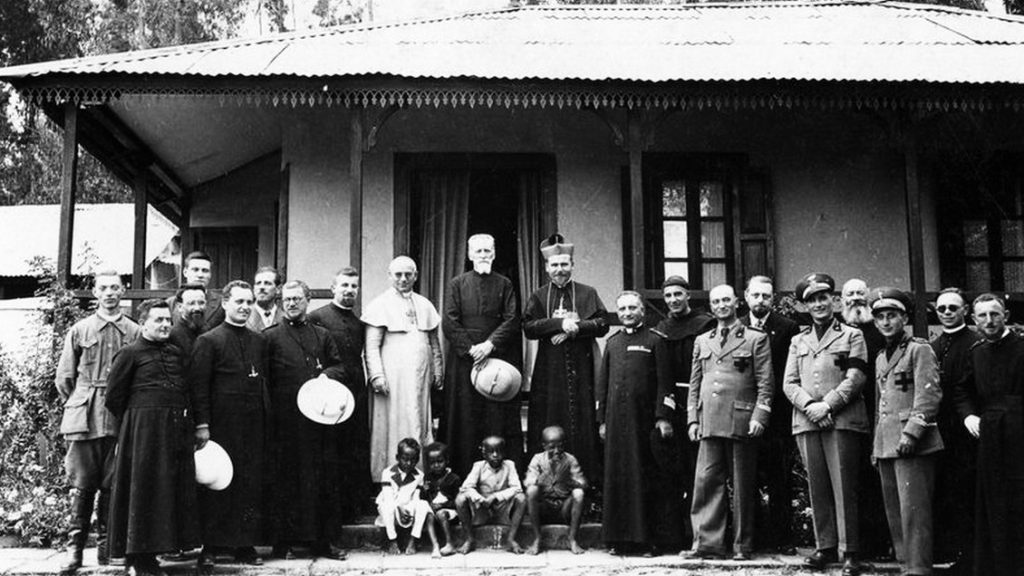
Ethiopia was the missionary dream of Giuseppe Allamano, who from the very beginning saw in Cardinal Massaia the inspiration for sending his missionaries. Unfortunately, the difficulties of entering that country were many. In 1902 he sent his first missionaries to Kenya in the hope that from there they might enter Ethiopia, but without success. Ten years later he tried again, and this time his tenacity, combined with the choice of the right people, led to the opening of several missions in a hostile territory (cf. Crippa, G., The Consolata Missionaries in Ethiopia, from the Kaffa Prefecture to the Vicariate of Jimma (1913–1942), Rome 1998).
In 1913 the Holy See entrusted to the Consolata Missionary Institute the Apostolic Prefecture of Kaffa, in the heart of the country, where the ancient Christian communities – hidden Catholics – founded by Cardinal Massaia and his successors, had been destroyed by the armies of Ras Wolde Ghiorghis, while the faithful had been massacred or deported. Canon Allamano was invited by the Holy See to propose a candidate for the new Prefecture. He responded with a letter of recommendation: …in accordance with my judgment regarding the more senior members of the Institute, I believe that the most suitable candidate, in the present case, is Father Gaudenzio Barlassina, who has already been on mission for ten years. […] I believe that, for the Kaffa Prefecture, Father Barlassina is to be preferred on account of his gentleness and goodness of character. A nomination that was anything but simple: the political and religious context of the country demanded caution, adaptability, and a great capacity to read reality.
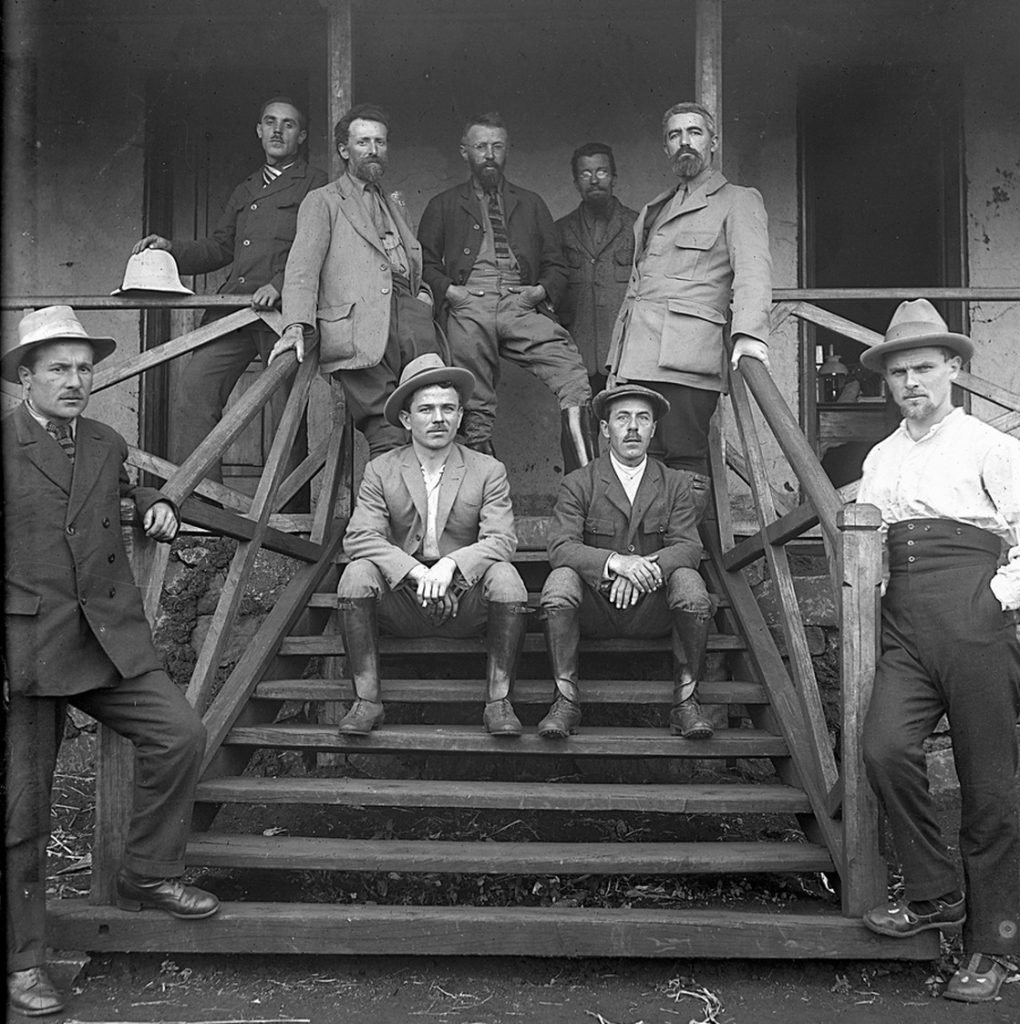
For the Apostolic Prefect, entering Ethiopia was not easy. The local government denied every entry permit, despite the attempts of the Italian government’s representative. In 1914 he left Italy to try to enter Ethiopia, passing through the northern desert of Kenya and arriving by way of Lake Rudolf; but neither this route nor that of ascending through the Oromo lands along the Jubba allowed him to enter. He then tried through Somalia – this attempt too was in vain, as the route passed through Eritrea, a region forbidden to the missionary. More determined than ever, he returned to Massawa, departed for Djibouti, and on December 25, 1916, made his humble entry into Addis Ababa on the back of a mule, amid logistical difficulties, bureaucratic obstacles, and prudent strategies. His Name Remains Above All Linked to Ethiopia
Monsignor Barlassina met Prince Tafari Mekonnin (the future Emperor Haile Selassie I) and presented humanitarian motivations as the reason for his entry into Ethiopia: the intellectual and moral formation of the Ethiopian people through agriculture and commerce. Having obtained from the local chief a written commercial licence for himself and his two companions, Barlassina thus began, in a clandestine manner, the missionary activity within the Apostolic Prefecture of Kaffa. At the beginning of 1919 he organized a caravan with which he intended to make an extensive reconnaissance tour of that territory. He set out with Father Toselli, who had arrived in October 1918, intending to reach Billo, Ghimbi, Gore, Kaffa, Jimma, and Limmu. This journey would be remembered as “the Blas caravan.”
The chronicles and missionary accounts describe him as a true “caravan leader,” capable of adapting, of travelling arduous paths, and of living with simplicity and determination. Together with his confreres he would present himself as a merchant, in order to enter the country, establish the first contacts, and begin a missionary work that was discreet yet effective.
It was the beginning of a mission built step by step. No spectacular gestures, but a discreet and patient presence: study of languages, knowledge of the territory, relationships with local authorities, and attention to human development. Barlassina understood immediately that the proclamation of the Gospel had to go hand in hand with concrete initiatives: agriculture, artisanal activities, and support for communities. With his patience and prudence, he was able to make himself known, respected, and loved.
A Discreet yet Incisive Missionary Style
The diaries and testimonies of the first missionaries recount a life made up of daily sacrifices: long journeys on horseback or on muleback, gruelling days and evenings devoted to language study and letter-writing. He was not only a man capable of adapting to extremely harsh living conditions – long and dangerous journeys, precariousness, isolation – but also an attentive, respectful, and never intrusive missionary.
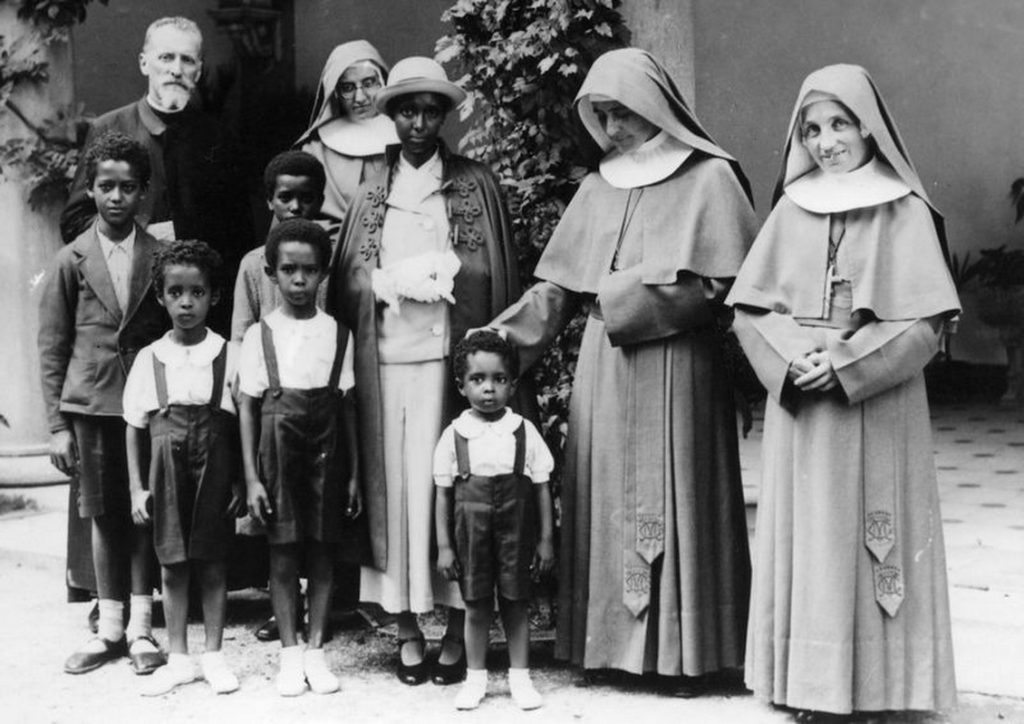
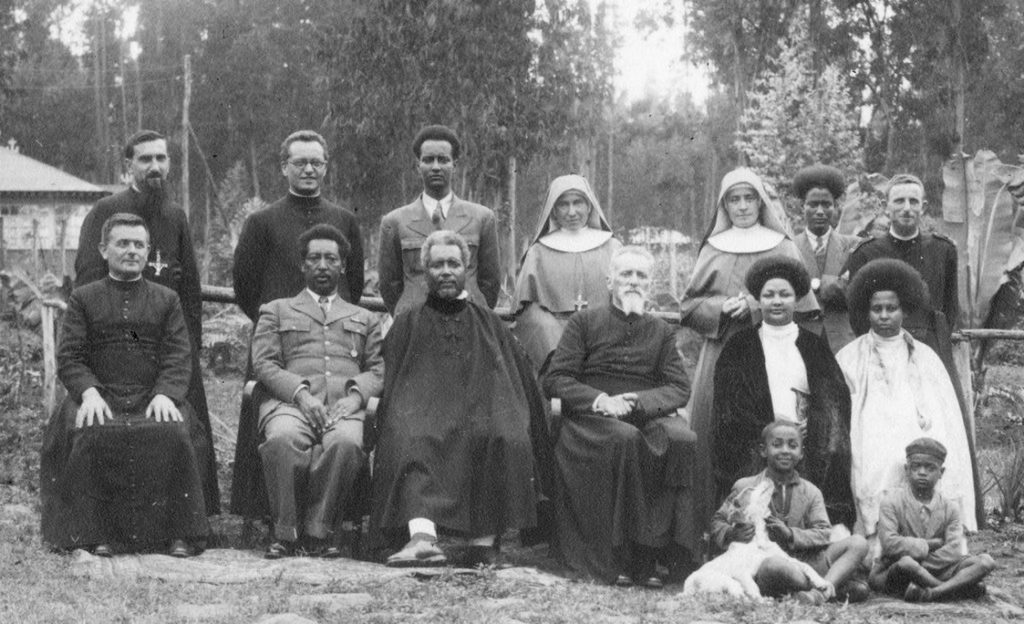
In a context marked by the strong presence of the Ethiopian Orthodox Church, the strategy was one of discretion. The Consolata missionaries in Ethiopia, under Barlassina’s guidance, avoided every form of confrontation, choosing instead a silent and credible presence. A clandestine mission. It was a style that, over time, bore fruit. The first Christian communities were born, missionary stations with chapels developed, and a presence took shape that was destined to endure. Among the most significant insights was that of the promotion of women and female presence in the mission, with the founding of the “Sister Handmaids of Mary Consolata.”
From Mission to the Governance of the Institute
If until that point the task of Father Barlassina had been arduous – and he had faced it with full responsibility and dedication – without his knowledge a still more onerous commitment was being prepared for him, one that required uncommon courage and total availability. Indeed, in 1933, while the mission in Ethiopia was taking shape, a new call came for Monsignor Barlassina: to leave the land of mission in order to assume the role of Superior General of the Institute. It was a difficult transition, marked by radical change, in which the spirit of obedience once again prevailed. From Turin he guided the Institute through complex years, marked by the war, the consequences of the Apostolic Visitation, and profound historical transformations.
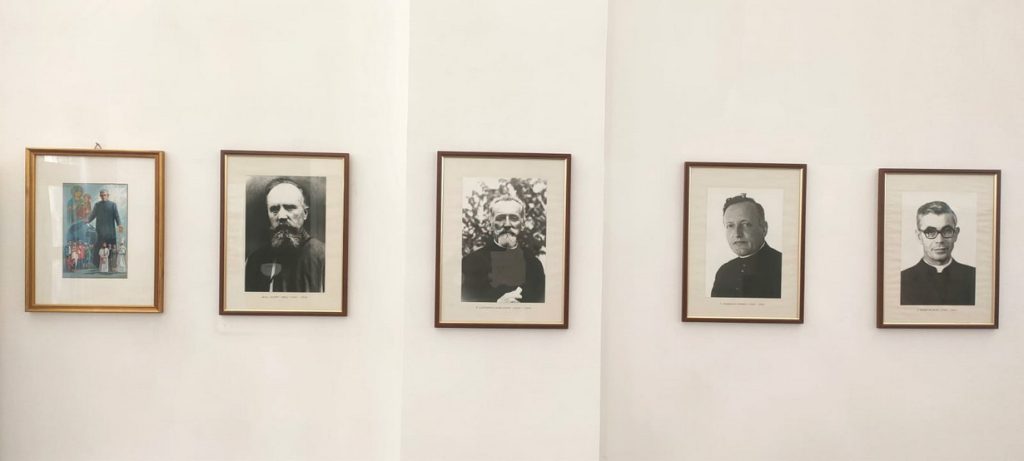
According to the testimonies of his fellow missionaries and the historians of the Institute, his governance was characterized by balance, prudence, and attentiveness to persons. Not a conspicuous charismatic leader, but a solid figure, capable of keeping the missionary family united and of accompanying it through the challenges of the time. Subsequently, he was called to Rome as Procurator General to the Holy See, continuing to serve the Institute with discretion.
If there is one trait that emerges with particular force in the figure of Father Barlassina, it is his faith. Not theoretical, but lived in daily life. From his writings there emerges clearly the awareness of his own frailty, accompanied nonetheless by a total trust in God. Writing to the Founder after his appointment to Kaffa, he confessed: the more I am convinced that I can do nothing, the more certain I am that God will act. It was this conviction that sustained him in difficulties: in the risky crossings, in the uncertainties of the mission, in the changes imposed by obedience. Even in the hardest moments, his response remained simple and calm: Deo gratias! His was a concrete spirituality, made up of constant prayer and trusting abandonment.
A Legacy Still Relevant Today
Father Barlassina died in Turin on April 27, 1966. He left no last will and testament in the customary sense, but his “spiritual” testament as a religious, as Apostolic Prefect, and as Superior General consists of the 38 circular letters collected in the Official Bulletins of the I.M.C. from No. 1 to No. 11 and in No. 16 – letters that flowed less from his mind than from his heart, tracing the authentic physiognomy of the Consolata Missionary. Sixty years on, his figure retains a striking relevance. In a time when mission continues to engage complex and rapidly changing contexts, his experience offers precious guidance for contemporary missionaries: capacity for adaptation, respect for cultures, study of the local language, attention to human development, and above all, a faith that does not waver.
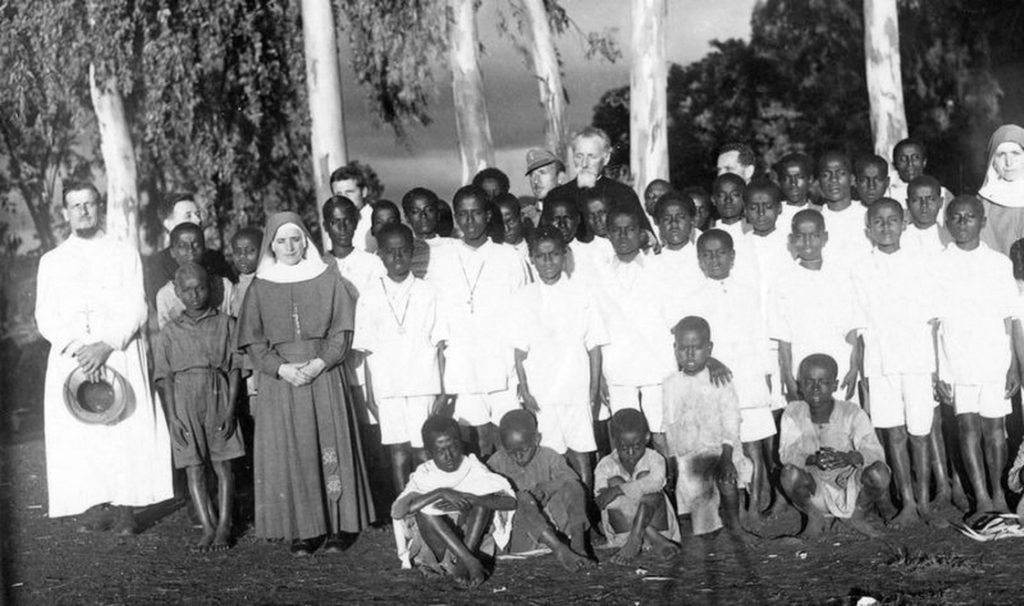
His life is a reminder that mission requires not only perfect strategies, but above all availability, patience, and trust. And that even in the most uncertain situations, it is possible to press forward, step by step. Perhaps this is precisely the most essential and incisive message he leaves behind: to keep walking, doing one’s part, and entrusting the rest to God. Today we commemorate him with gratitude, making our own the expression that accompanied his entire life: Deo gratias!
* Father Ashenafi Yonas Abebe, IMC, studies Church history at the Gregorian University, deputy director of the Historical Office in Rome.