St. Joseph Allamano without a doubt, clearly emphasized certain points that complement the core of the charism, declaring them important and indispensable. Our Institute, throughout its history, has committed itself to being faithful to these characteristics.
By Jonah Makau *
The last significant moment was the renewal of the Constitutions, which outlined a list of characteristics, starting with community awareness. Specifically, these characteristics are those we know well: Eucharistic life, Marian piety (Consolatine), ecclesial awareness (Papal), love of the liturgy, family (and corporate) spirit, and industriousness. We know that the Founder intended these “specific characteristics” for missionaries. This certainly means that it is important for us to live them not only as priests and religious, but especially as missionaries.
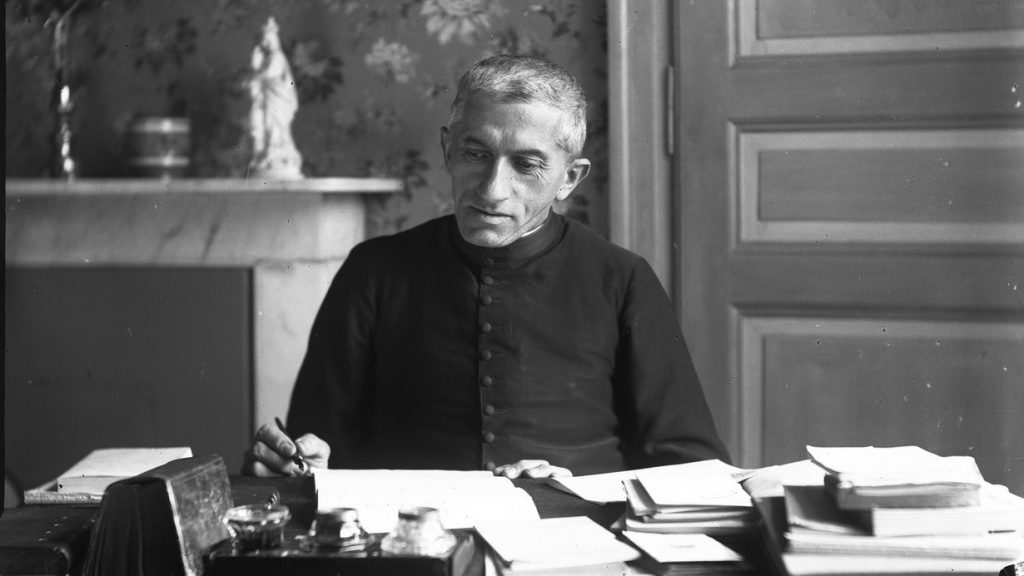
The first of the “specific characteristics” of our Institute is the Eucharistic characteristic. Certainly, all the Founder’s teachings on Eucharistic life apply here, including the synthesis of the “sacramentals.” However, it is not enough to be “sacramentals,” but we must strive to become “Eucharistic missionaries,” capable of making the Eucharist the starting and finishing point of all evangelization. Precisely because we are chosen to proclaim the mystery of the Lord’s death and resurrection, we are called particularly to commit ourselves to giving a prominent place to the daily celebration of the Eucharist.
Second, we know how much and how the Founder transmitted his Marian experience and spirituality, making it clear that his work is “of the Consolata.” That underlines the Marian characteristic of our Institute. Therefore, our spirituality must also be marked as “Marian.” However, filial love for the Consolata is not enough; we must be capable and ready to “announce” her glory to the people. Therefore, Our Lady is for us, in a special and original way, the “Star of Evangelization.”

Third, the Founder strongly aligned himself with the Pope in order to be aligned with the Church, at a particular moment from a theological (modernism) and social (anticlericalism) perspective. Our involvement in all matters relating to the Church is, therefore, original and must be visible. However, for us it is not enough to talk about love, fidelity, and adherence to the Church and the Roman Pontiff. As missionaries, we feel in a special way as “servants” of the Church, because we are sent by her in the name of Christ. Here also emerges the ecclesial communion and collaboration and the obedience to the Pastors that must characterize us, to build “ecclesial communities” that make the “Body of Christ” grow.This is what the ecclesial characteristic of our Institute is alla bout.
Fourth, our Founder left us a legacy of love for the Liturgy. It is part of our identity. In fact, it’s expressed in the faith and dignity with which we celebrate divine worship, and in the sensitivity that we demonstrate toward liturgical prayer. However, this is not enough. As missionaries, we must also commit ourselves to becoming the “voice” of Christ who implores the Father for the salvation of the world, and to building communities gathered in faith to celebrate the “memorial” of universal salvation. That is what the liturgical characteristic of our Institute is all about.
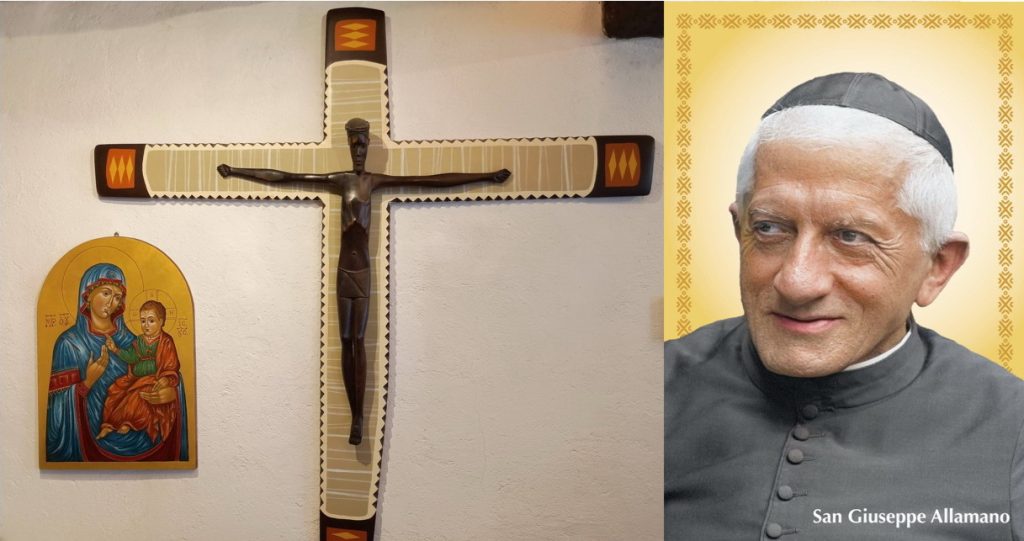
Fifth, our Founder wished us to live as a family. He was the first to live the family spirit that he taught, that way showing us that we are all brothers and sisters, called to take Jesus to the people of God as Mary our mothers did. We therefore know how much the Founder valued “esprit de corps” and “family spirit.” For him, the realization of this combination was one of the principal guarantees of the authenticity of his Institutes. It is not enough to live under one roof to call ourselves a family. As missionaries, we have to learn to be open, accommodating, and forgiving, in addition to having the capacity to sacrifice for the good of others. Those are the necessary qualities for building an international family, where differences of colour, race, nation, or tribe are not essential.
Finally, our Founder taught us thatworking is a way of living evangelical “poverty,” of sharing the plight of ordinary people who work for a living. The Founder was so strong on work that he considered those unwilling to work unsuitable for his Institutes. The true model on this point, for St. Joseph Allamano, was St. Paul. As missionaries, however, the spirit of industriousness is also an integral part of evangelization. It’s a form of “human advancement,” which changes the situation of the people of God, affirming our role as instruments of God’s love, providence and generosity to the people of God.
* Father Jonah Makau, IMC, Postulation and History Office, Rome.