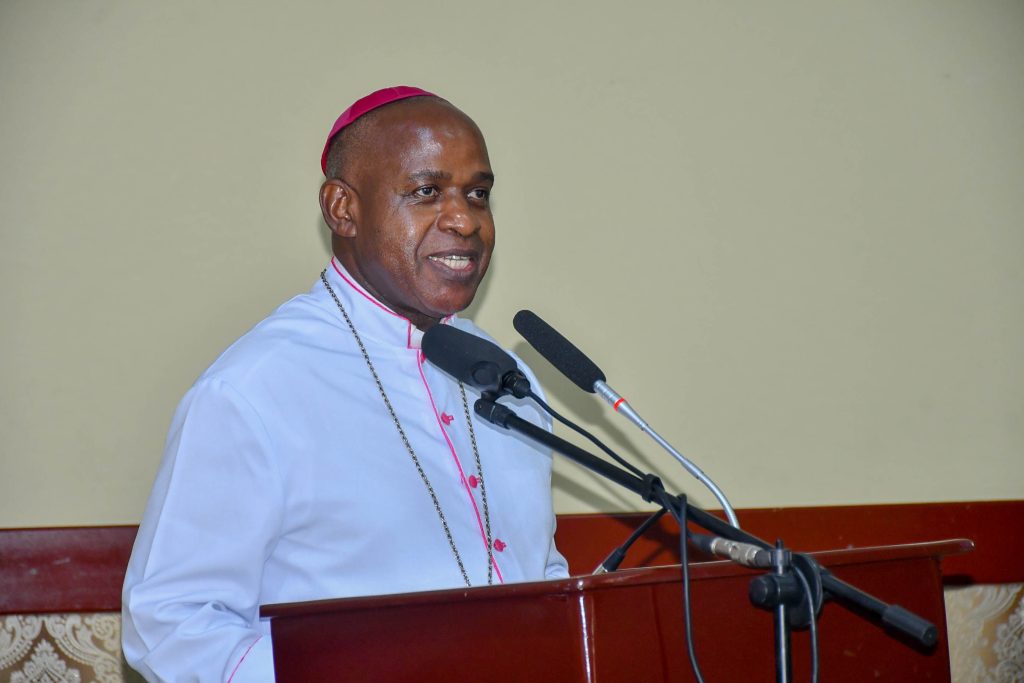
The Tanzanian Episcopal Conference Vice President, and Chairman of the Communications Department of the conference, bishop Eusebius Nzigilwa, has urged Tanzanian journalists to defend the truth in the face of the technological manipulations of the current world.
By Paulino Madeje *
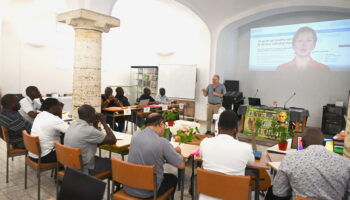
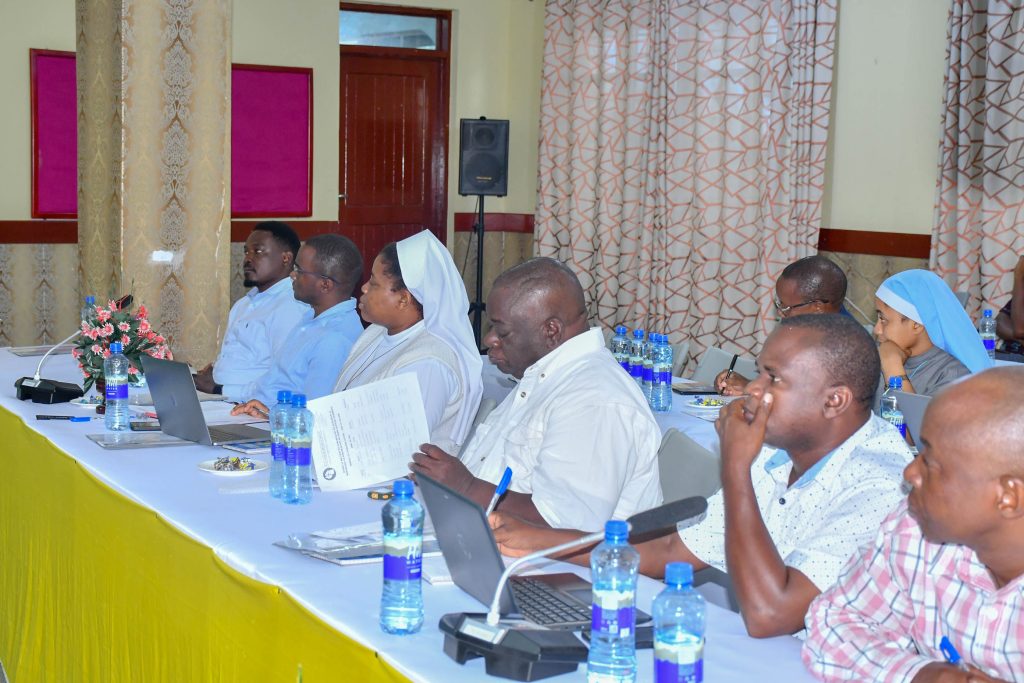
From 12 to 13 of May, 2026, The Department of Communications from the Tanzanian Episcopal Conference (TEC), organized a seminar to Communications Directors of Catholic Dioceses in the country. The goal of the meeting was to evaluate the communication reality in such Dioceses, and in this way, to plan the future. Interesting insights such as ‘The Artificial Intelligence and responsible use’, ‘Communications and TCRA’ (Tanzania Communication Regulation Authority) and other relevant related information were also offered to the participants.

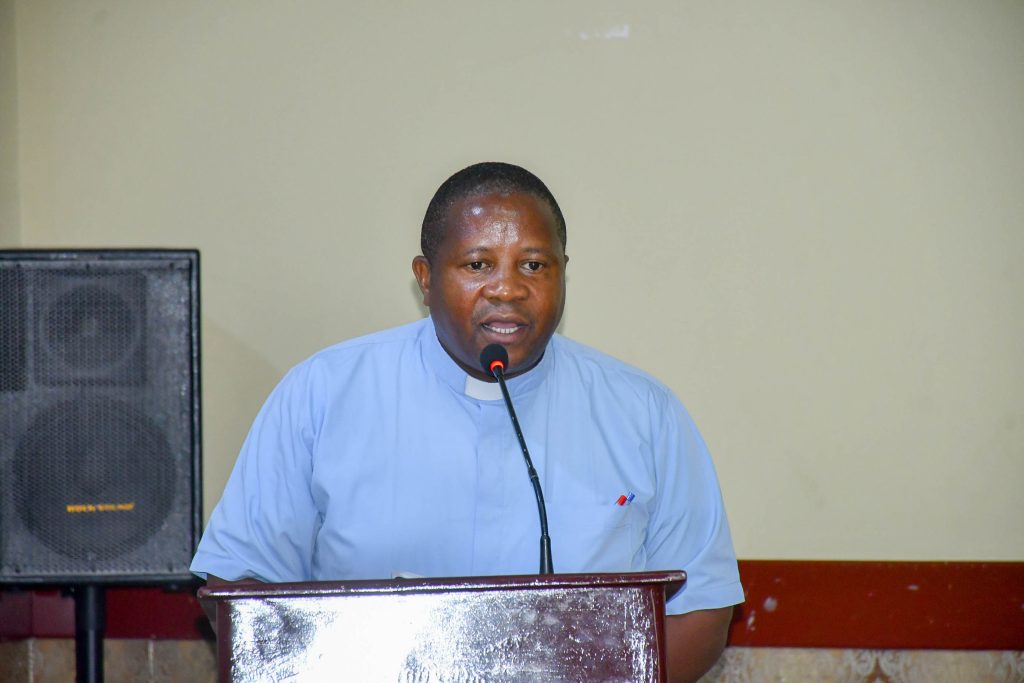
On his remarks, bishop Nzigilwa, who is currently chairing the Communications Department of the TEC, started by warning this group of Directors that, even if they possess the best and modern communication tools, all turns out to be void and nothing if they don’t have Christ inside them. Their first credibility should come from their ways of life, a life in concordance with the Gospel. “Living a life of testimony is the first communication. People will trust you because you live the Gospel and not because of the best modern communication tools that you own,” he pointed out.
The TEC Vice President then made a stirring critique of the modern communication condition, framed as a historical and spiritual warning. He began by diagnosing a fundamental problem in our contemporary world: the desperate hunger for instant results. He observed that society had become impatient, seeking easy answers to difficult questions.
The Divine Pace of History
To counter this, he reached back into the narrative of the Incarnation. He explained that God Himself did not opt for an instant fix for humanity’s brokenness. Instead, redemption was a process that unfolded with deliberate, chronological steps. He noted how it began with the message of an angel to Mary in Nazareth and moved slowly through years of growth, ministry, and eventual sacrifice. He anchored this in the scripture, stating that only “when the fullness of the time had come, God sent forth His Son, born of a woman” (Gal 4:4-5). This historical reality proved that life’s most profound transformations required a journey, not a shortcut.
The Erosion of Thought
In this seminar that was held in the TEC premises, the bishop then turned his attention to the technological landscape. While acknowledging the potential of Artificial Intelligence, he lamented its side effects on the human spirit. He argued that the convenience of modern tools had begun to strip away the human capacity for critical thinking. He observed that in the current culture, people are steeply losing their ‘attention span’, becoming unable to focus or follow a truth to its conclusion.
Drawing from his personal experience, bishop Nzigilwa, the current bishop of Mpanda Catholic Diocese, described a world where people, even those sitting in the pews, listen to a sermon only to immediately return to a life of distraction. This lack of attentiveness was, in his own view, one of the greatest obstacles to the Gospel preaching today and at the same time it impels people to look for quick and soft answers to life challenges.
The Economy of Deception
In his reflection on integrity of information, the bishop distinguished between misinformation, born of ignorance, and fake news, which he defined as the deliberate distortion of reality. He noted with irony that we had entered an age where people were paid to lie, because sensationalism and fabrications traveled at a velocity that the humble truth could not match.
He drew a chilling parallel to the narrative of the Resurrection, recalling on how the guards at the tomb were bribed with money and orders to spread a specific lie: “His disciples came at night and stole Him away while we slept” (Matthew 28:13). He warned that modern media was often a continuation of this same trap, sacrificing truth for the sake of popularity, ‘likes,’ or financial gain.
The Final Mandate
The bishop’s final exhortation was a call to spiritual and professional courage. He reminded Church journalists and the faithful that their primary duty was to lead souls to salvation, not to maximize their viewership. He insisted that by standing with the truth, they were fulfilling their role as “good and faithful servants” (cf. Matthew 25:23), whose reward would be found in eternal life rather than digital metrics.
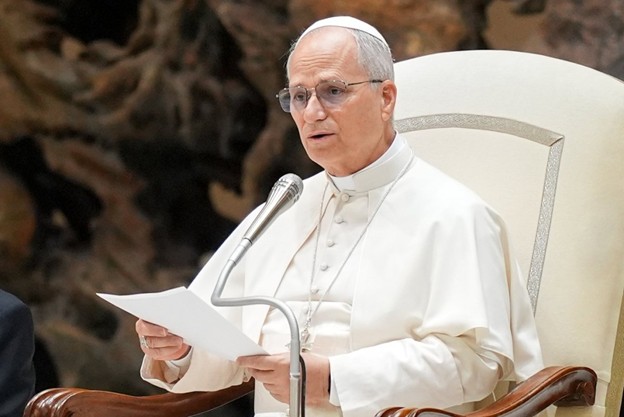
“The Church media outlets must not fall into the trap of seeking an audience by distorting certain truths just to please listeners and offend Christ, who is the Truth, the Way, and the Life,” he recommended. He further mandated to the Directors that: “This technology (the Artificial Intelligence) should be used in a way that promotes humanity and human dignity, as well as the dignity of the Catholic Church.”
He closed with a definitive theological claim: Truth is not a subjective preference; it is a person. He reminded his audience that Christ Himself said, “I am the Way, the Truth, and the Life” (John 14:6), and that ultimately, “the truth will set you free” (John 8:32). His parting wisdom was that a lie would never become true simply because it was popular, and the truth would never cease to be true simply because it was ignored. To reject the truth, he concluded, was quite literally to reject Christ.
* Fr. Paulino Madeje, IMC, Tanzania and African Continent Communications Coordinator.