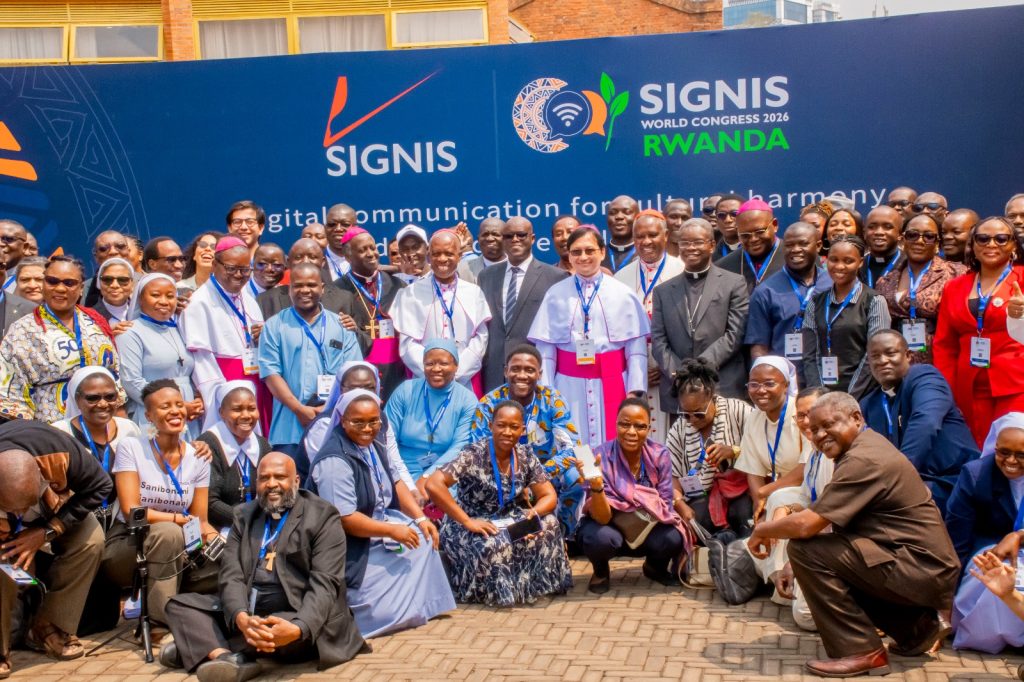
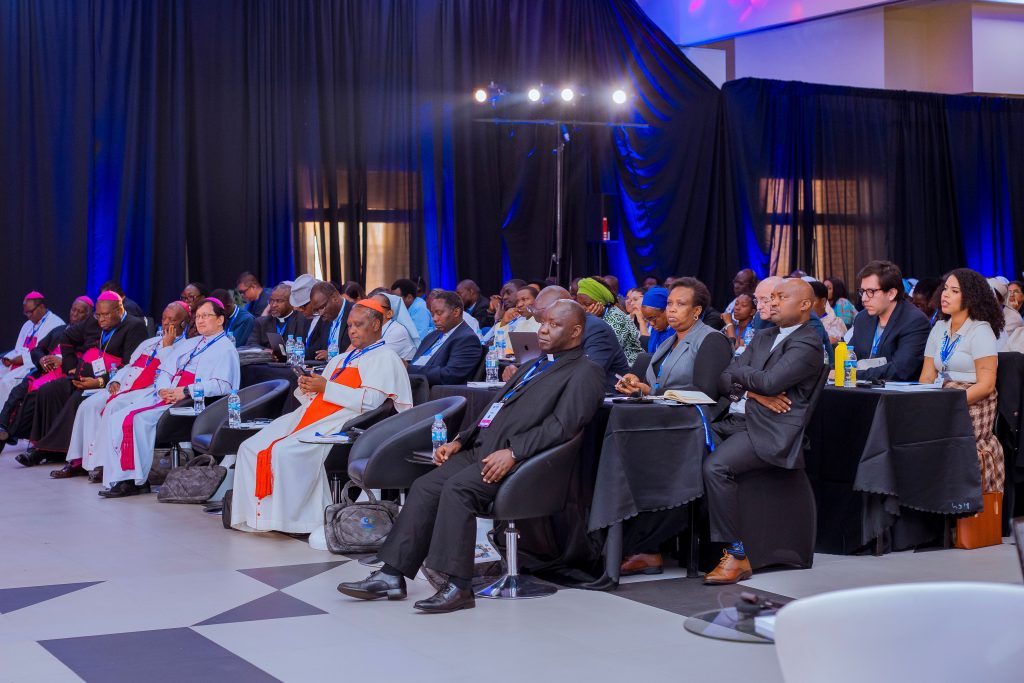
From August 3rd to 8th, SIGNIS, a global Catholic communication association, held a World Congress in Kigali, Rwanda. Focused on the theme “Digital Communication for Cultural harmony and Environmental Well-Being,” the conference brought together more than 300 participants from all over the world. Different themes from distinguished professionals, experts and practitioners in media industry were shared to the participants.
By Paulino Madeje*
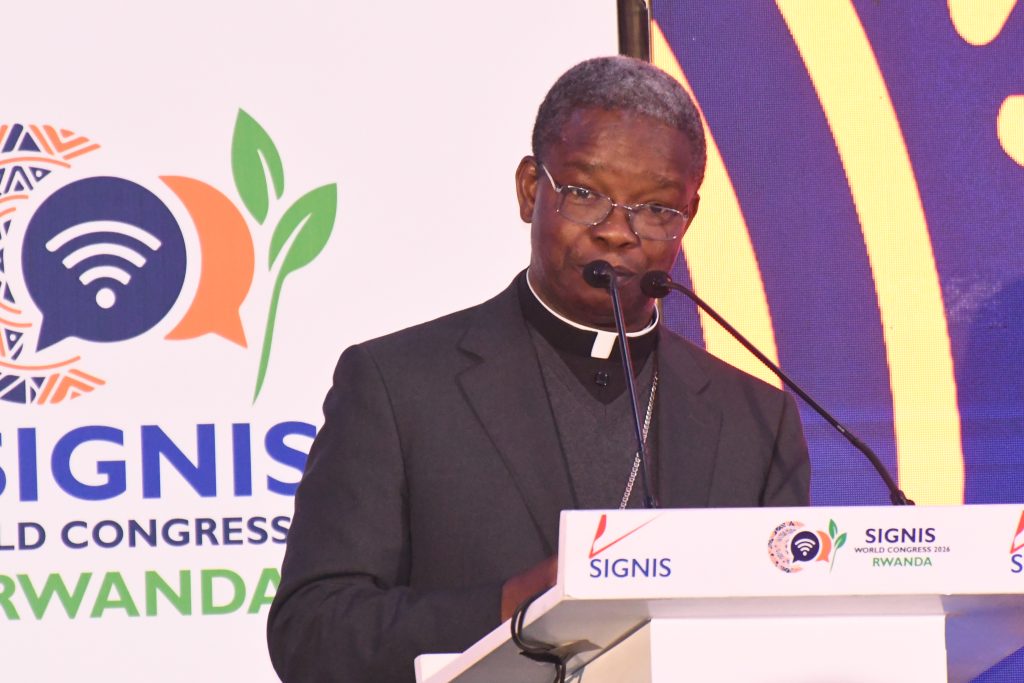
Tackling the theme: Digital Communication for Culture and Environmental Well-Being, Archbishop Fortunatus Nwachukwu, a Nigerian Prelate and Vatican Official for Evangelization, opened his exposition pointing out that the African Church is now mature and ready to contribute fully to the global Catholic Church. In this way, it needs to evangelize itself and the entire world. For that case, the use of different media of communication is essential. However, he warned that Catholic communicators must act as disciples rather than online influencers on platforms like TikTok, Instagram, and YouTube. He urged communicators to protect the environment, support vulnerable people, and focus on genuine human connection. He advised young people to think critically before building online platforms, promote unity, include environmental topics in their content, and use artificial intelligence only as a tool that cannot replace human conscience, alluding to Pope Leo XIV’s Encyclical Magnifica Humanitas.
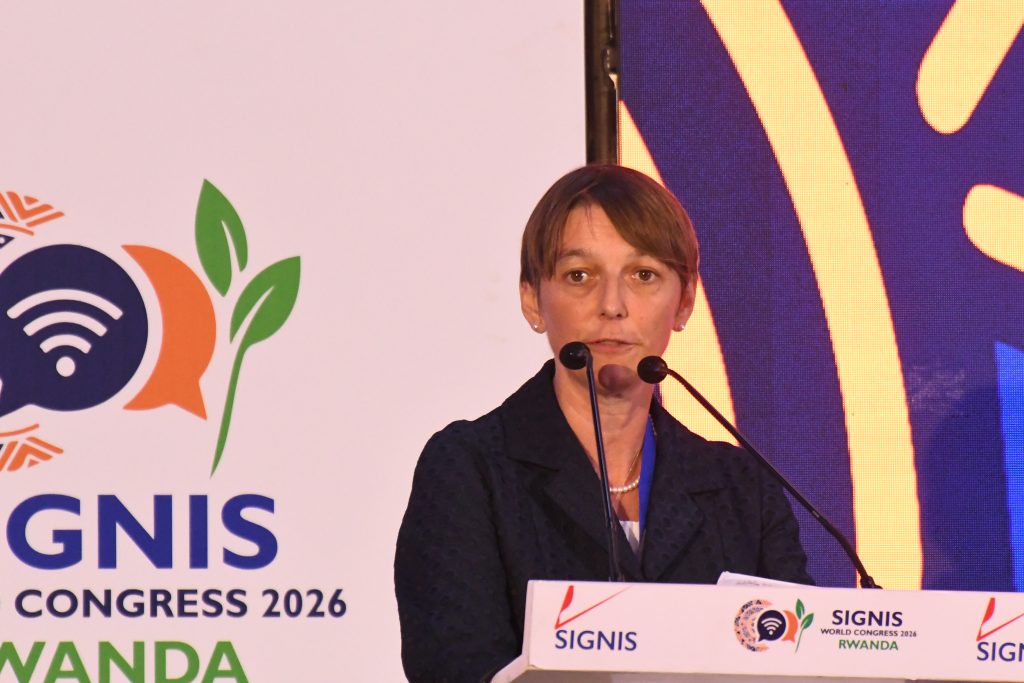
On the same token, warning about digital threats like online impersonation and Artificial Intelligence (AI)-generated deepfakes of Church leaders Dr. Nataša Govekar, Director of Pastoral Direction at the Vatican Dicastery for Communication, emphasized the need to protect human identity and build healthy communication habits based on critical thinking. She noted that relying too much on digital tools reduces independent thinking. She added that engagement algorithms cause digital addiction and anxiety, AI tools change natural vocabulary, and fake news websites ruin public trust while taking funding away from real journalism.
Contributing on protecting the young generation in the digital age, Fr. Gijo Joseph, a Catholic priest and specialist in youth digital well-being, stated that protecting children online requires fixing major problems in the digital system rather than relying only on parental controls. He noted that the internet exposes young people to cyberbullying, predators, and algorithms designed to profit from them. He emphasized that screen interaction cannot replace human dignity. Since technical filters fail, he called for teaching youth critical thinking skills alongside a shared effort where parents model good habits, faith leaders support digital wellness, teachers explain AI limits, and governments enforce strict privacy laws.
Shading more insight to the discussion, Fr. Lawrence Adu-Gyamfi, a priest specializing in youth ministry, stated that young people now spend more time on personal devices without adult supervision instead of engaging in traditional family activities. While devices offer educational tools and self-expression, they also expose youth to misinformation, emotional harm, and online abuse. He noted that laws usually act only after a crime occurs, so the Church must focus on moral education and critical thinking. He recommended that adults guide and listen to youth, add digital safety to religious education, and set clear safety rules for church online groups.
In her contribution, Sr. Patience Shinondo, an expert in child protection and anti-human trafficking, explained that online abuse frequently leads to real-world human trafficking. Online abusers use fake job offers, false promises, and blackmail to exploit children for forced labor, sexual abuse, organ harvesting, and illegal scams. She noted that trafficking worsens due to poverty, instability, and displacement. She called for better digital literacy for parents and teachers, safety education in schools, and legal mandates forcing technology companies to add safety features, use AI to catch abuse, and enforce age limits.
In his argument, Prof. Jean-Paul Niyigena, Coordinator of the African Educational Pact Institute, explained how African Catholic schools work to protect students from digital manipulation and the loss of local culture. The initiative focuses on three goals: teaching students to seek objective truth, building empathy for vulnerable people, and resisting uniform cultural values pushed by global media companies. He urged Catholic communicators to highlight marginalized communities and preserve authentic African values while resisting commercial pressure from big media organizations.
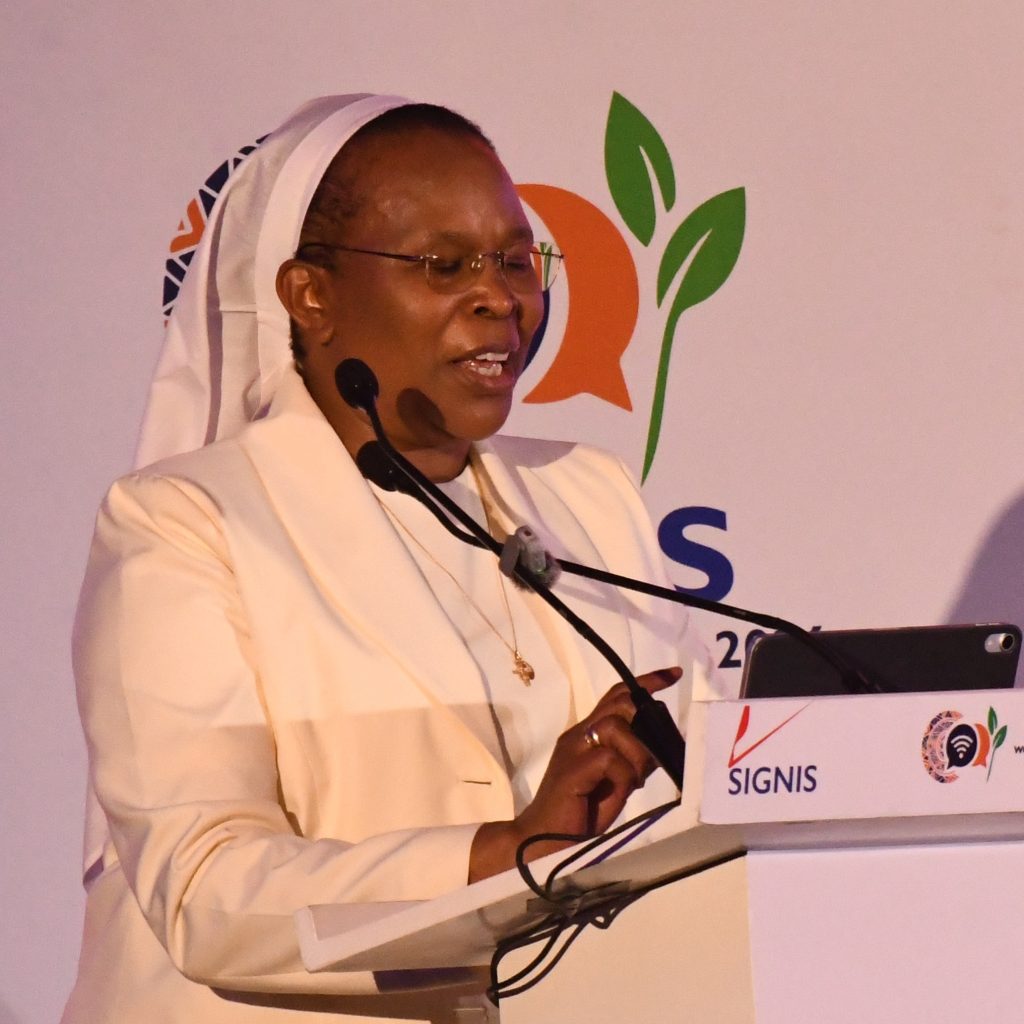
Regarding the Theme: Pentecost Project and Wisdom Calls: How professional communicators can work alongside religious sisters to amplify their voices in the public square, Sr. Jane Wakahiu, Head of Catholic Sisters at the Conrad N. Hilton Foundation, stated that communication should build practical relationships rather than just share data. She explained that sharing stories serves as a tool for justice when it gives a voice to ignored people, pointing to examples of young women getting help to rebuild their lives after forced child marriages. She noted that religious sisters continue working in poor and crisis-hit areas long after news media leave, and sharing their work reminds society of human dignity.
During her intervention, Sr. Nina Krapić, Deputy Director of the Holy See Press Office, stated that media saturation, Artificial Intelligence content, and sensationalism create a shortage of accurate human stories. She noted that mainstream media often reduces Catholic sisters to stereotypes, while religious media sometimes focuses too much on social media trends instead of real accomplishments. Because sisters run schools, hospitals, and social services worldwide, she urged media outlets to cover their actual work. She highlighted projects like the Pentecost Project and Wisdom Calls, which train communicators to share field-based stories about human dignity and social care.
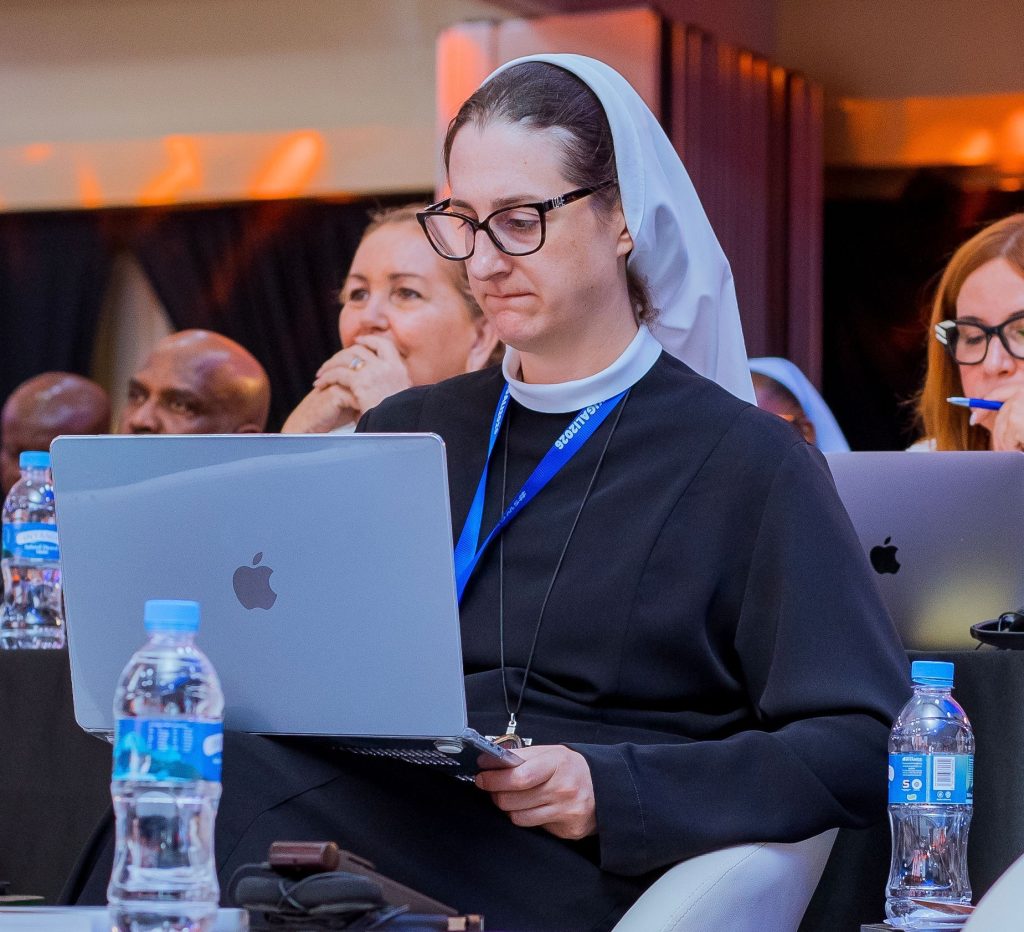
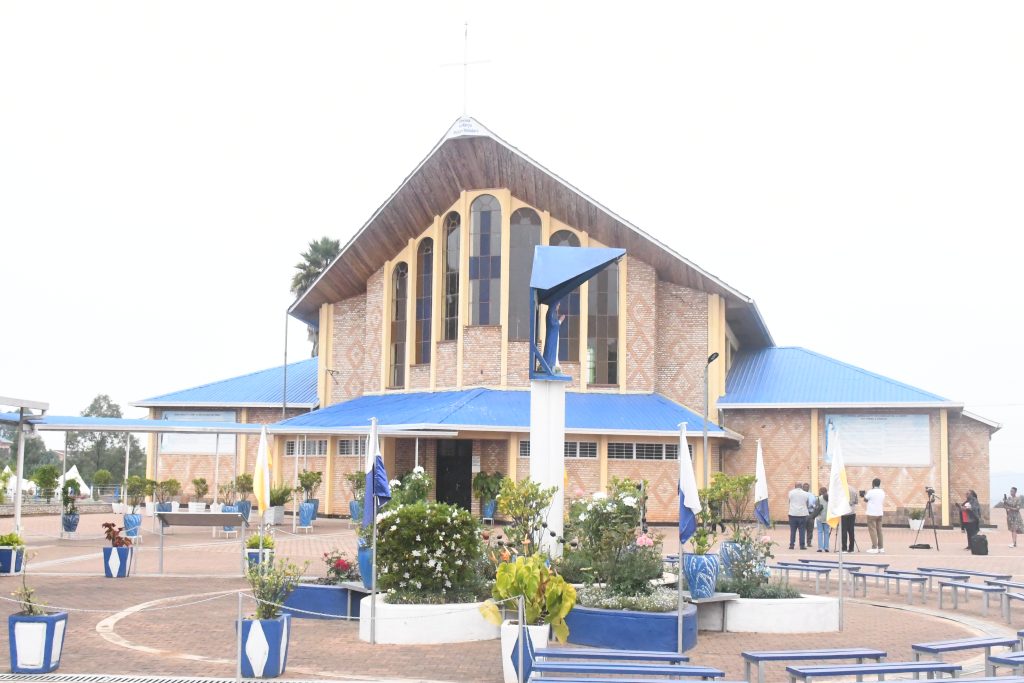
During their program, SIGNIS participants had the opportunity to visit several key political, social, and religious sites across the country. These visits gave them a deeper understanding of the local history, faith traditions, and social recovery efforts.
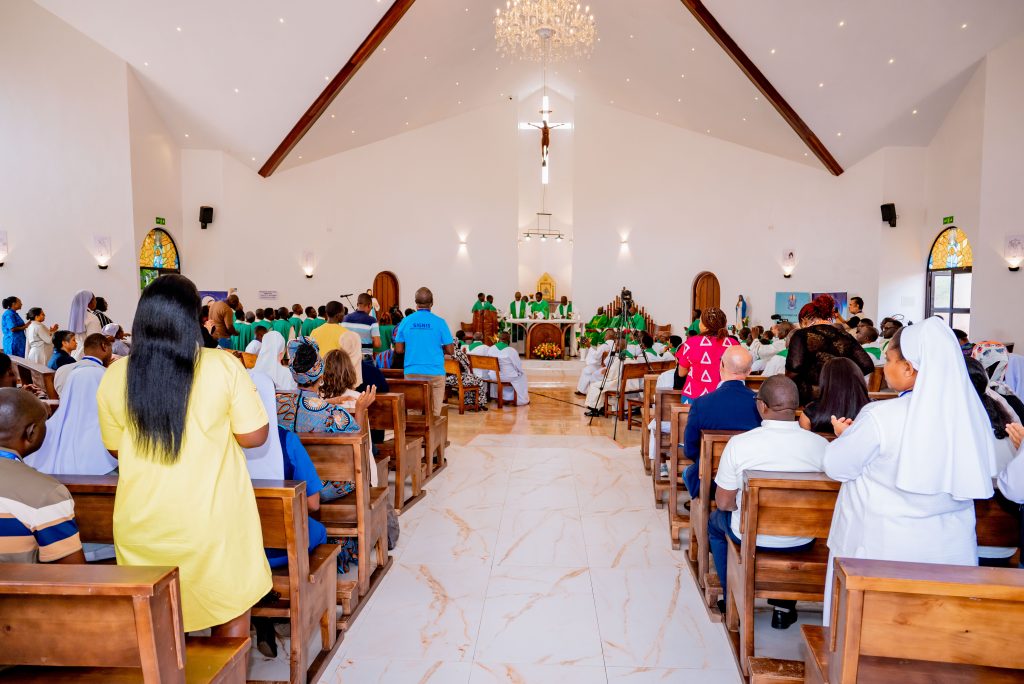
One major religious stop was the Shrine of Our Lady of Kibeho. This site serves as a vital spiritual gathering place that welcomes visitors from many different countries, backgrounds, and religious beliefs. Many pilgrims travel to the shrine with deep faith, seeking spiritual peace, prayerful guidance, and the blessings associated with the Marian apparitions recognized there.
In addition to spiritual sites, the participants visited the Kigali Genocide Memorial. This museum preserves the historical records, personal stories, and memory of the tragic 1994 genocide against the Tutsi. Walking through the memorial evokes strong feelings of sorrow and pain as it reflects on the devastation caused by political and ethnic division. At the same time, the center highlights the remarkable resilience, reconciliation, and progress of the Rwandan people since the tragedy.
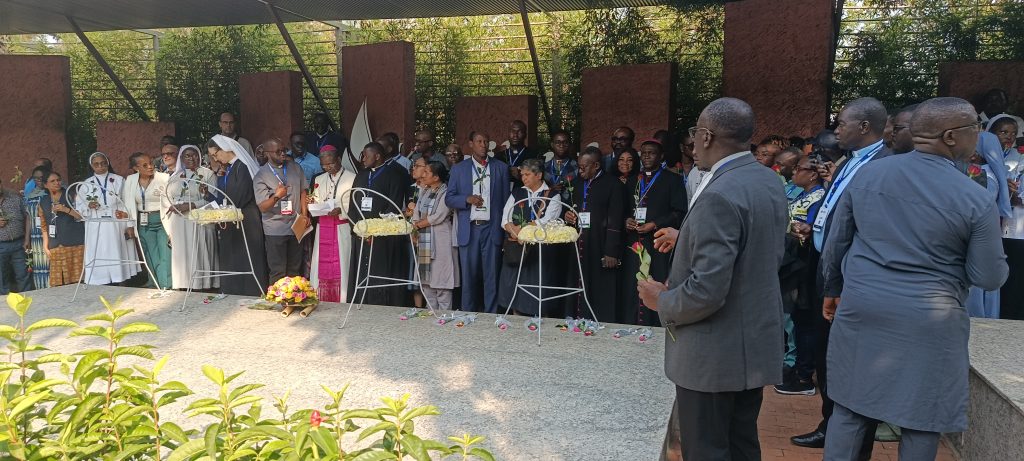
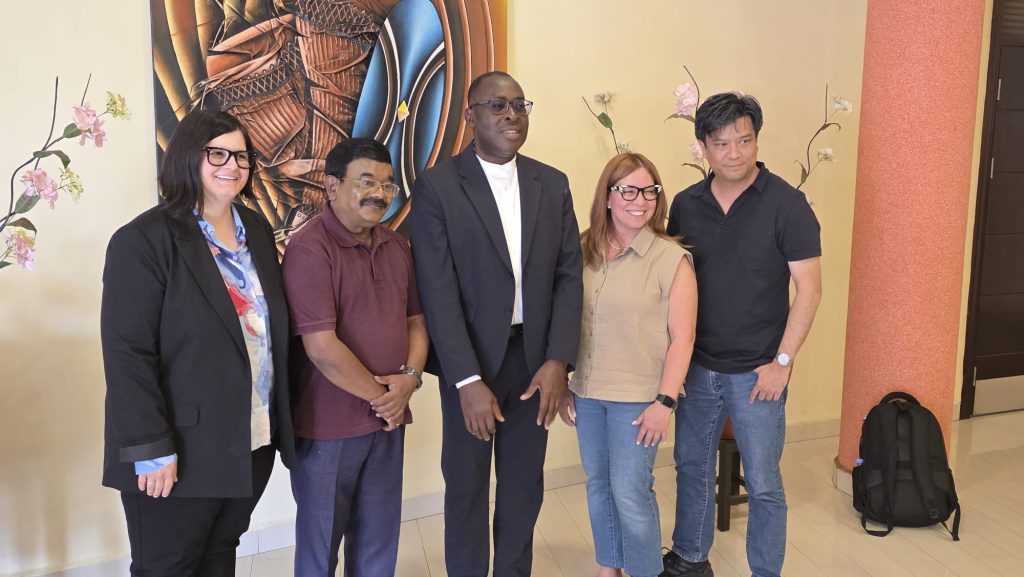
Overall, Rwanda serves as a powerful example of a nation that has overcome extreme historical suffering to build stability, unity, and hope for the future.
At the end of the Congress, a leadership election was held, with Fr. Walter Chikwendu Ihejirika emerging as the new SIGNIS World President, becoming the first African ever to hold such a post. Meanwhile, Fr Fidele Mutabazi, a Rwandan priest of the Archdiocese of Kigali, was elected new SIGNIS Africa President.
*Fr Paulino Madeje, IMC Communication Coordinator for Africa.