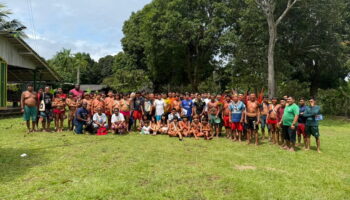
During the holidays, I had the opportunity to live a missionary experience at the Catrimani Mission, among the Yanomami people in the state of Roraima, Brazil. More than a time dedicated to specific activities, this experience of about two months became for me a profound journey of listening, learning, and a change in the way I look at reality, far from the routine of theological studies in São Paulo.
By Albanus Kioko *
During those days, I came to understand that the mission is not based only on what is done or said, but above all on humble presence, respect for the other’s culture, and the willingness to walk together.
In this article, I share the perceptions, challenges, and discoveries experienced in the daily life of the mission, where listening proved to be a fundamental attitude for genuine encounter. The aim is to contribute to a reflection on the mission that does not impose itself, but allows itself to be transformed by the people with whom it walks.
The missionary experience in the territory of the Yanomami people led me to understand that mission does not necessarily begin with the proclaimed word, but with attentive listening to the life, culture, and history of the other. In a context marked by a strong cultural identity, social challenges, and a deep relationship with nature, the mission reveals itself, first of all, as humble presence and a willingness to learn.
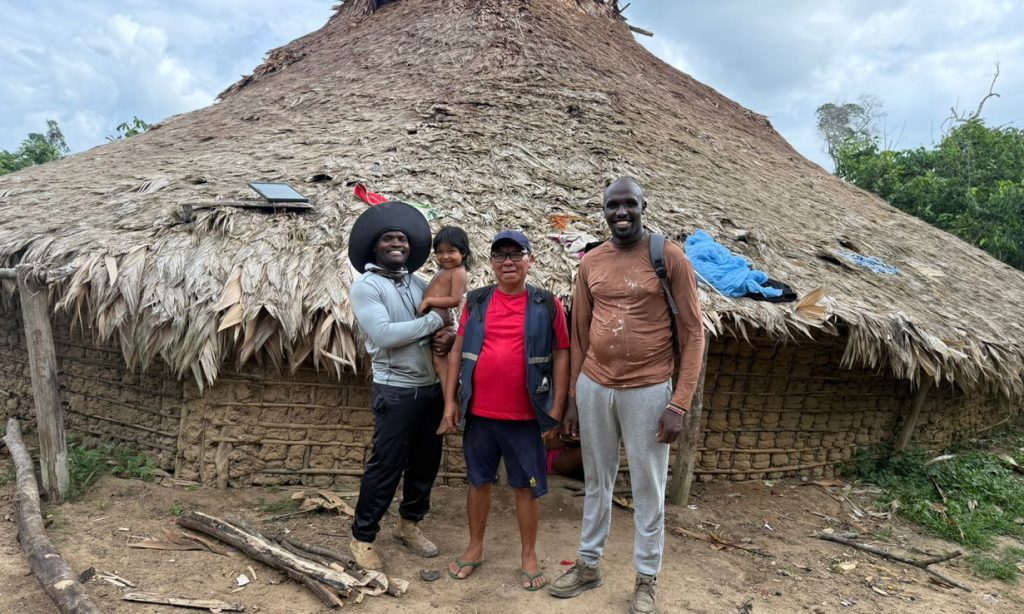
During the time of living together at the Catrimani Mission, it became clear that true missionary encounter is born out of respect, closeness, and sincere openness to the way of life of the Yanomami people. More than carrying out activities or presenting proposals, mission is expressed in being together and walking with the people, recognizing that God is already present in their history.
A context of life and resistance
Catrimani is a space of great cultural and human richness, where the Yanomami people live in deep relationship with the forest, the community, and the cycles of life. Collective identity, verbal communication, and care for nature are central elements of their way of existing. Every daily gesture expresses an understanding of the world characterized by interdependence between people and the environment.
At the same time, it is a context marked by historical and current challenges, such as the defense of territory, health, and external threats. In this scenario, the missionary presence is called to be a sign of solidarity and respect, avoiding any form of cultural or religious imposition. Mission unfolds in everyday reality, characterized by resilience, wisdom, and hope.
Listening as a fundamental attitude
From the very first days, it was clear that listening is the fundamental attitude for any missionary action in Yanomami territory. Listening does not mean only understanding words, but welcoming silences, observing gestures, respecting rhythms, and learning to grasp the deeper meaning of relationships.
This listening requires humility and conversion. It is not about arriving with ready-made answers, but about allowing the others to reveal themselves from within their own culture. Inspired by the attitude of Jesus, who draws near and listens before speaking, the Mission at Catrimani invites a discreet and attentive presence. Listening generates trust, and trust opens the way to a true encounter, where the Gospel is witnessed above all through life.
Living together as a space for evangelization
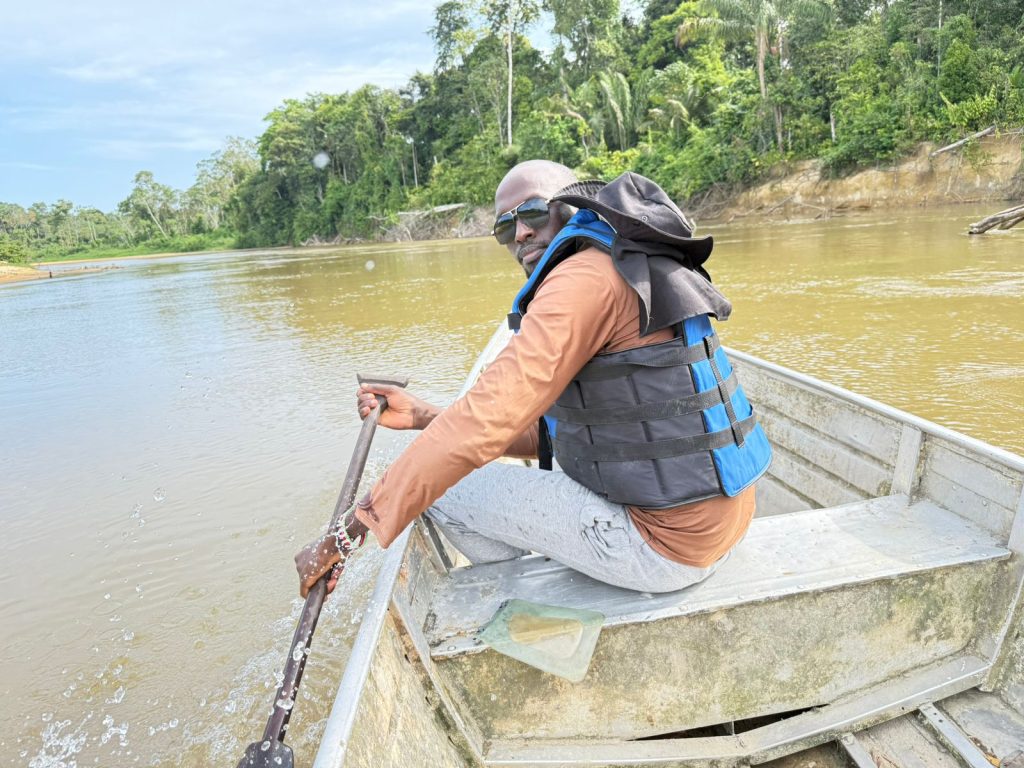
Daily coexistence with the Yanomami people showed that evangelization often takes place in the simple gestures of everyday life. Sharing life, walking together, participating in community activities, and respecting local customs become concrete forms of missionary presence.
Activities such as literacy programs, agricultural work, the construction of chicken coops, and beekeeping were important, but always lived through dialogue and shared life. More than practical results, what left a lasting mark was the process built together with the population, in which human relationship took priority.
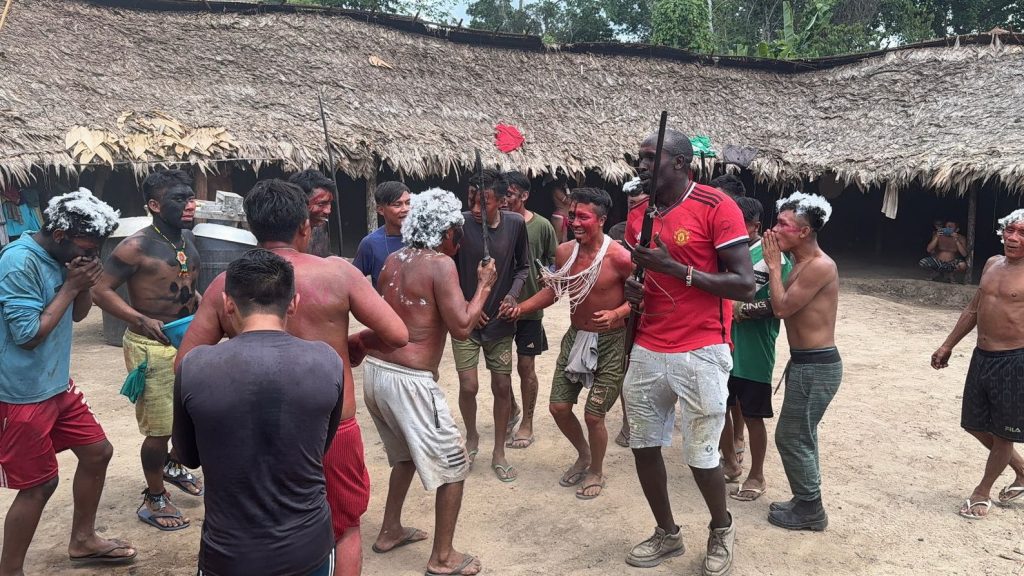
This coexistence also included respectful participation in significant moments of community life, such as cultural celebrations held when a member of the community passed away. Accompanying these rituals was a profound experience of listening and learning. Being present in these moments meant sharing the pain, respecting what is sacred in the other’s culture, and recognizing that the mission is also carried out in silence and solidarity.
Challenges, limits, and missionary conversion
The Mission at Catrimani presents important challenges, such as language barriers, cultural differences, and the risk of interpreting reality based on external categories. In many moments, a sense of powerlessness emerges in the face of one’s own limits. There is also the challenge that Indigenous communities must face in defending their territory and culture from the attacks of gold miners and invaders interested in natural resources.
However, these limits become an opportunity for growth and missionary conversion. Recognizing that one does not have all the answers helps to build a more human and evangelical mission. Listening, once again, proves essential in order to avoid attitudes of imposition and to value the protagonism of the Yanomami people.
A mission that allows itself to be transformed
The experience at Catrimani teaches that the mission that begins with listening transforms both the one who is listened to and the one who listens. The Yanomami people are not merely recipients of the mission, but protagonists of a history in which God is already present and active.
In a world characterized by haste and an excess of words, this experience reminds us that the Kingdom of God is often built in silence, in faithful presence, and in deep respect for the other. When mission begins with listening, it ceases to be an imposition and becomes an encounter. Listening to the Yanomami people was a concrete way of encountering God and renewing the most authentic meaning of mission.
* Albanus Kioko, IMC, Kenyan student at the Theological Seminary of São Paulo, Brazil.