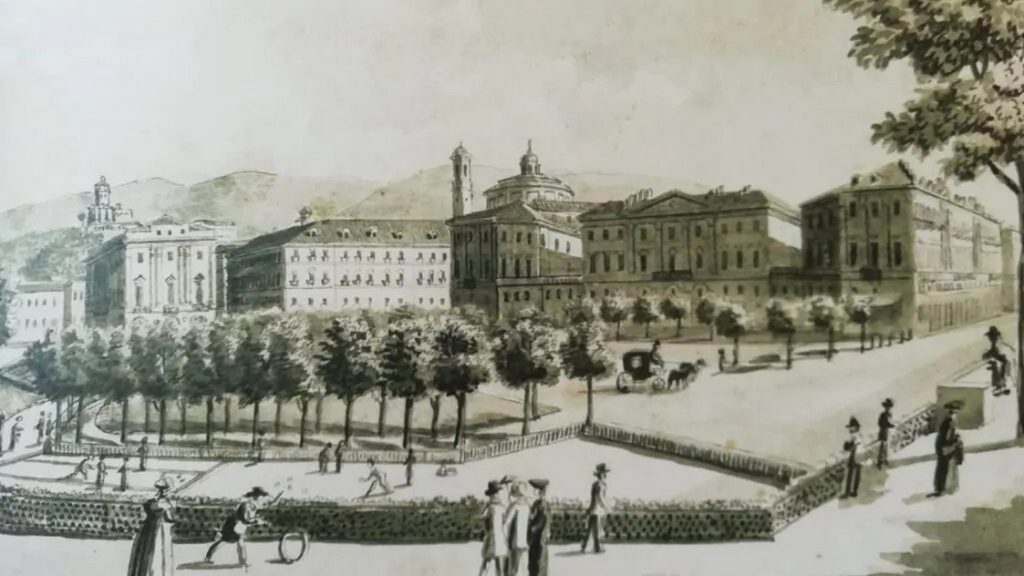
Historians and theologians agree that, despite a political climate marked by tensions between the liberal State and the Church, Turin in the 19th century remained one of the most dynamic centers of Catholic religious life in Europe.
By Ashenafi Yonas Abebe *
Even as processes of secularization, masonry, anticlericalism, and social modernization were developing, the city experienced an extraordinary flourishing of holiness and pastoral initiatives. This phenomenon has led many historians to speak of the «Turin school of charity» or «Turin, city of the social saints», a context in which Christian faith was translated into concrete works of charity, education, and human development.
The cultural, economic, and social transformation of the city – characterized on the one hand by industrialization and urbanization, and on the other by migration from the countryside – generated new forms of poverty and marginalization. Thousands of young people arrived in Turin in search of work, often without education or family support. The response of the Church in Turin was not merely defensive toward modernity, but proactive, creative, and pastoral: priests, religious men and women, and laypeople created a vast network of educational, charitable, and missionary works. In this context emerged extraordinary figures who helped shape a model of social Catholicism capable of combining spirituality, charity, and commitment to transforming society.
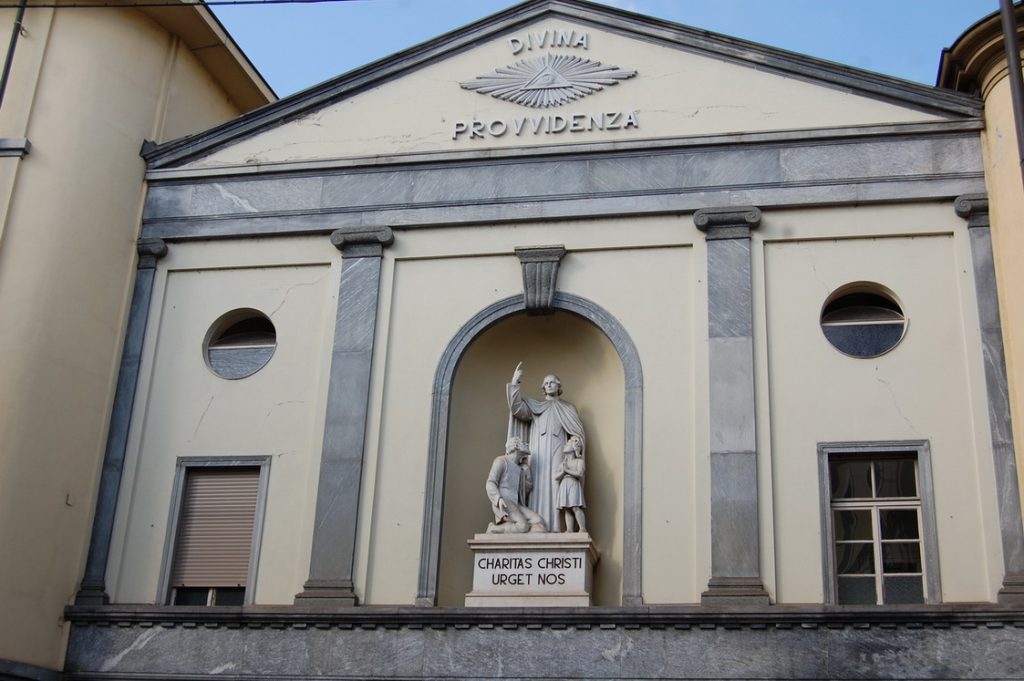
Many figures played a leading role in, and bore witness to, the nineteenth-century Catholic revival in Turin. Among the most emblematic was Giuseppe Benedetto Cottolengo, a Turin priest who, in 1832, founded the «Little House of Divine Providence», widely known as the «Cottolengo». This institution welcomed those for whom public hospitals had no place: the chronically ill, the disabled, the poor, and the abandoned. It rested on a radical trust in Divine Providence and took shape as a community uniting religious men and women with lay faithful. Cottolengo represented a concrete response to the growing social marginalization produced by urban modernization. It was not merely assistance, but a new way of understanding Christian charity as a stable institution serving the most disadvantaged classes. Alongside Giuseppe Benedetto Cottolengo stand two lay figures of noble origin, the Venerables Giulia Falletti di Barolo and Tancredi Falletti di Barolo, founders of the «Opera Pia Barolo» and devoted promoters of schools and charitable works for imprisoned women.
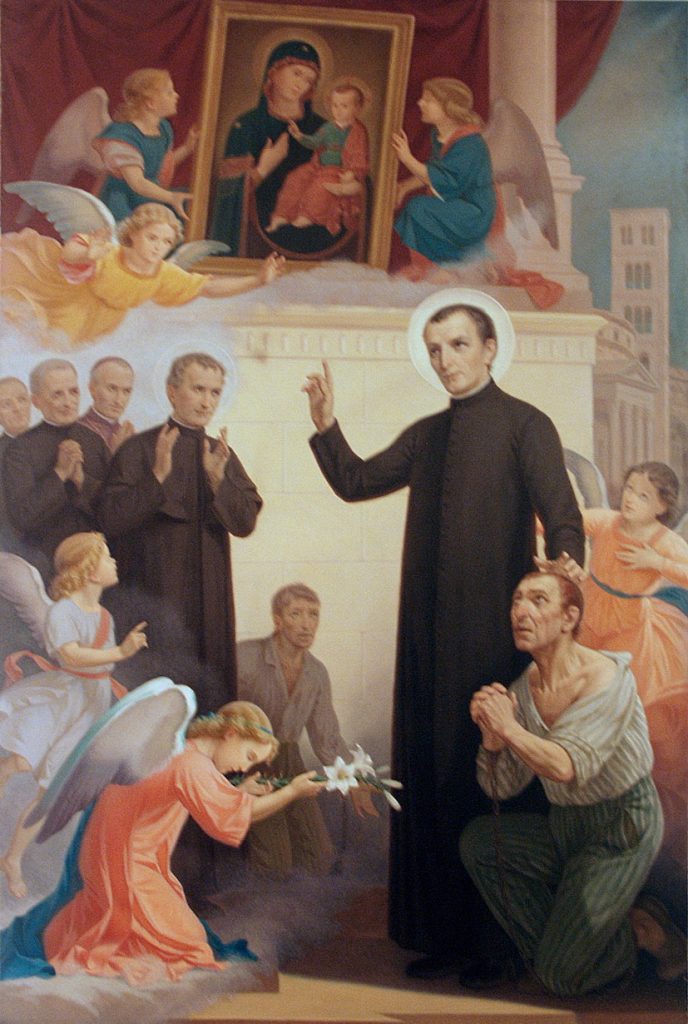
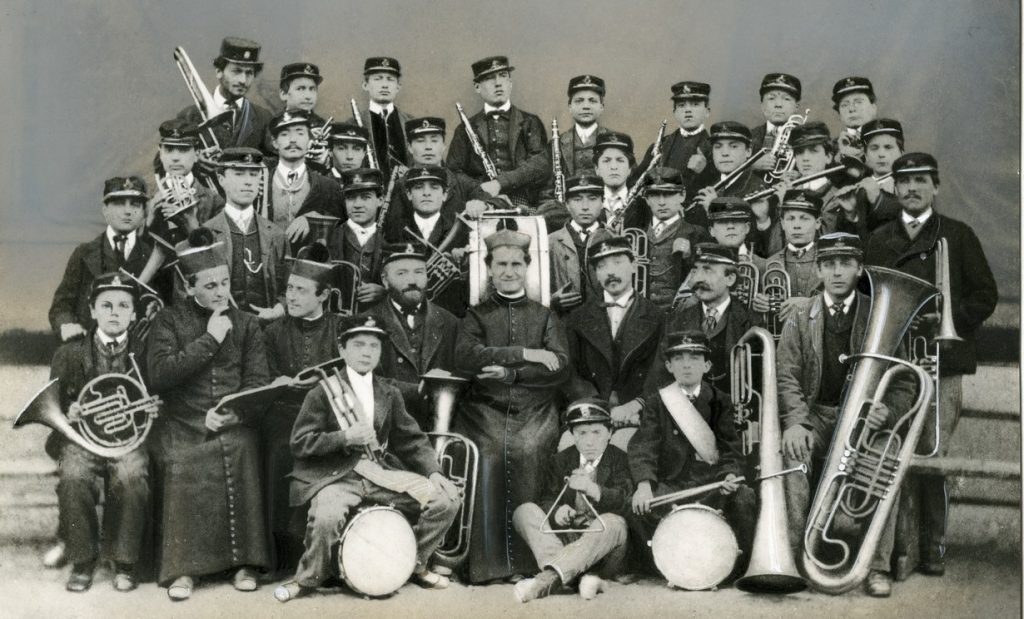
Among the most influential figures was Giovanni Bosco, widely known as Don Bosco. He dedicated his life to the education of poor and abandoned youth in the industrial city. In the Turin district of Valdocco, he developed the oratory as a comprehensive educational environment, providing religious formation, basic schooling, vocational training, and both human and spiritual guidance. In 1859, Don Bosco founded the Society of St. Francis de Sales, better known as the Salesians of Don Bosco, to spread his educational approach throughout Italy and the world. His «preventive system», grounded in reason, religion, and loving-kindness, offered an innovative response to the challenges of urban modernity and the needs of young people.
Another important personality who played a decisive role in Turin’s religious life was Giuseppe Cafasso, a priest and spiritual father at the Ecclesiastical College of St. Francis of Assisi, an institution dedicated to the formation of young priests. Cafasso was a great spiritual director and confessor and profoundly influenced numerous Turin priests, including Don Bosco himself. His ministry was marked by special attention to prisoners and those condemned to death, whom he accompanied spiritually until their final moments. His work helped form a clergy sensitive to social problems and capable of a pastoral approach close to the people. Another significant figure was Leonardo Murialdo, a priest committed to the education of young workers. He founded the Congregation of St. Joseph (the Josephites of Murialdo), dedicated to the professional and Christian formation of young people. Murialdo clearly understood the problems of emerging industrial society and sought to provide young people with practical tools for entering the workforce, promoting vocational schools and educational activities.
Alongside the social and educational works developed in the urban context, Turin also gave rise to an important missionary impulse. A central figure in this field was Giuseppe Allamano, a priest from Turin and founder of the Consolata Missionaries (men and women). Canon Allamano served for 46 years as rector of the Sanctuary of Our Lady of Consolata, one of the most significant centers of Turin spirituality. Inspired by this place of spirituality and formation, Allamano developed the missionary project that led to the founding, in 1901, of a missionary institute dedicated to evangelization and human development. The first missionaries were sent to East Africa in 1902, initiating a Church presence that combined evangelization, human promotion, and education.
The work of Giuseppe Allamano expresses a new dimension of Turin’s spiritual heritage: a missionary vision open to universality and multiculturalism. Although working in a local context, he conceived the Church’s mission in global terms. His perspective can be summarized in the idea of “acting locally while thinking universally”: the spiritual life, formation, and charity developed in Turin became the foundation for a mission that transcended national boundaries.
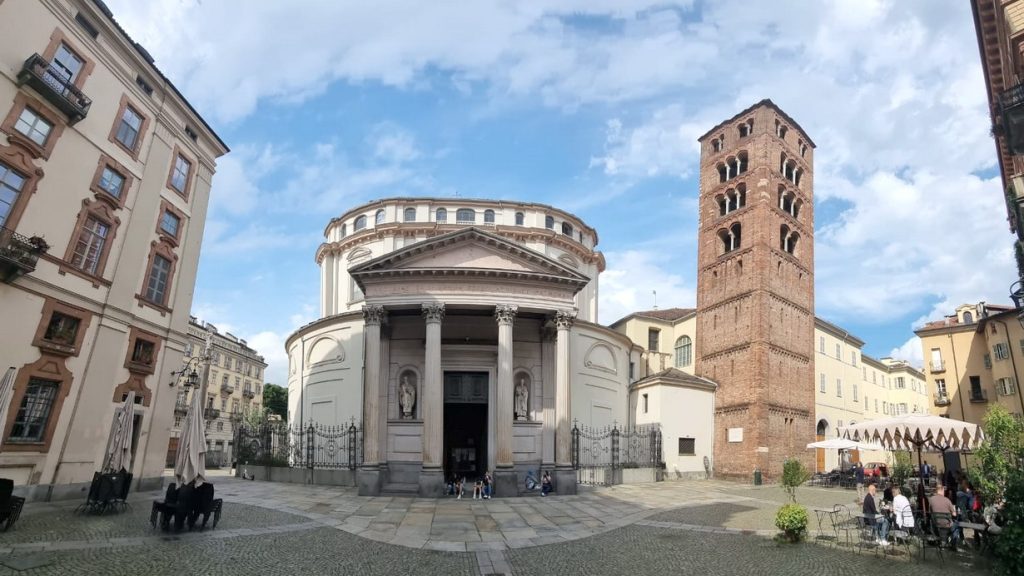
All these promoters of Christian charity acted with a clear awareness of Turin’s evolving social landscape, bringing together empathy and charisma as they founded institutions and congregations of pontifical right. They are witnesses of a living faith that transforms contemplation into concrete acts of compassion and solidarity for various categories of the disadvantaged, the vulnerable, and the marginalized, within an area of Turin that, for this reason, can rightly be called the «Square Kilometer of Charity», as described by Don Luca Peyron in his article That space in the center of Turin where the true wealth is humanity, published in Avvenire on Saturday, March 7, 2026.
Within this «square kilometer» of the city, from the nineteenth century to the present day, works of charity, religious congregations, and social apostolates have taken shape, and numerous charisms have emerged. For these and other historical and religious reasons, Roberto Repole, Metropolitan Archbishop of Turin and Bishop of Susa, launched in January the idea of an international candidacy to make this «city of charity» better known worldwide. The project to register the area as a UNESCO World Heritage Site aims to secure its recognition, protection, and enhancement as a place of outstanding universal value.
* Father Ashenafi Yonas Abebe, IMC, studies Church history at the Gregorian University, deputy director of the Historical Office in Rome.