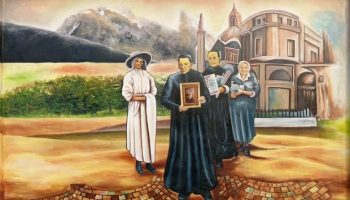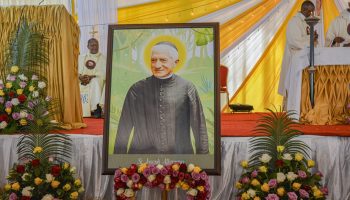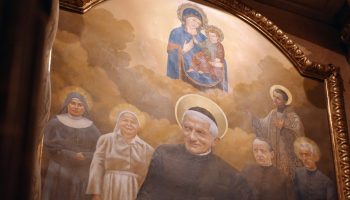
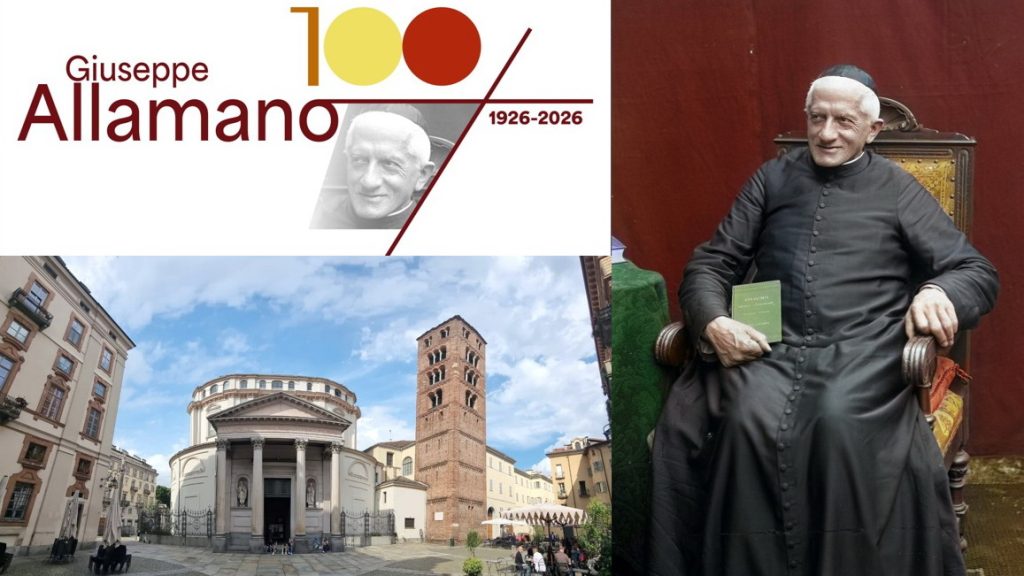
We celebrate 100 years since the “birth into Heaven” of Saint Joseph Allamano, our Founder. It is important ask him to help us to be effective instruments of consolation in the world. Although at the beginning when the Institute was starting certain themes were not talked about at all as part of the charism, today we realize that they are not alien to our Charism. Well, to be fair, they may have been talked about in other ways.
By Jonah Makau *
If however they were not in fact talked about, today they are seen as part of the Charism by extension. In other words they have somehow necessary entered into the charism without changing the charism. For example, we can easily identify the new forms of poverty, economic globalization and mass migration as some of themes that today cannot be ignored, because they are also real challenges for the mission, and they continue to be thorns in the work of evangelization. As missionaries however, these challenges are opportunities to do good.
The new poor
Today, the number of the really poor people in the world has grown to the point that it is no longer sufficient, nor realistic, to speak of the “third world.” However, we have been forced to invent the term “fourth world”. If this perverse trend is not stopped, we will soon have to say “fifth world”! Today, however, let us speak of the “North” and “South” of the globe, to indicate the two areas, the rich one (north) and the poor one (south). We are on the level of “justice” at the world level.
In the Encyclical ‘Centesimus Annus’, John Paul II said: “It is necessary to break down the barriers and monopolies that leave so many peoples on the margins of development, to ensure that everyone – individuals and nations – have the basic conditions that allow them to participate in development. The stronger nations must be able to offer the weaker nations opportunities to enter international life, and the weaker nations must be able to seize these opportunities, making the necessary efforts and sacrifices” (n. 35). We are also aware of the interventions of the Magisterium on the need to reduce the “foreign debt” of developing countries.
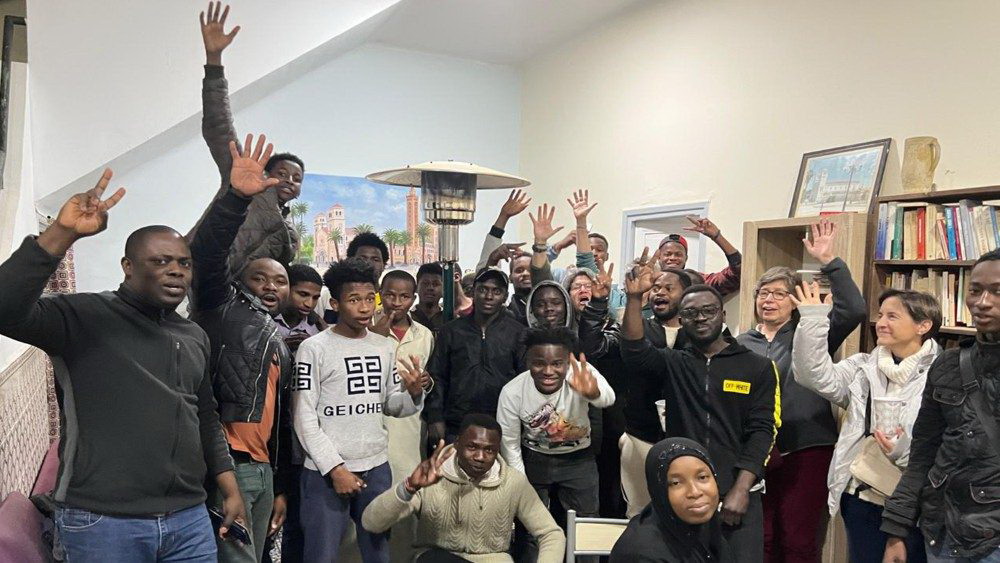
For us, especially if we live and work in poor countries, it is essential to have a “spirit” and an “attitude” of attention, sensitivity, sharing of problems and involvement in concrete activities. We cannot back down, reserving only the spiritual part for ourselves. We cannot live as if our actions do not have earthly value even as they have spiritual one. Even the Founder “did not doubt that men would love ‘a religion which, beyond the promises of the next life, makes them happier on this earth'”
Globalization of the economy
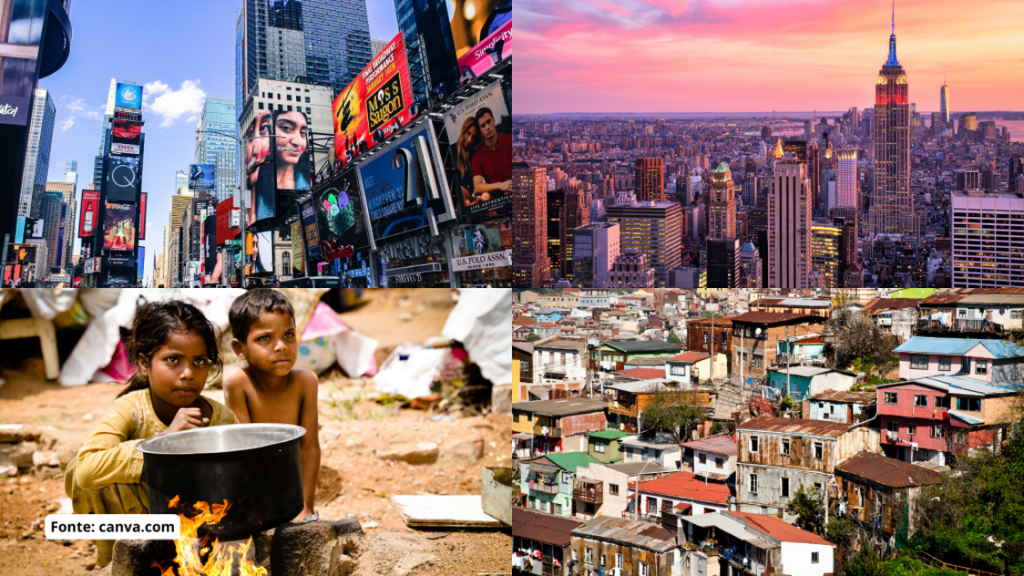
Among the causes of growing poverty, one is certainly the globalization of the economy or, as it is commonly called, “globalization”. It is a relatively recent phenomenon, at least in the terms in which we know it.
This phenomenon, which should not be negative in itself, but its implication has gradually made it appear bad. We note with anxiety as rich countries crush the poor ones, increasing the gap between the two sides. Given the real situation of the various countries, it is easy to understand why today there are two opposing attitudes regarding economic globalization: those who defend it for its advantages and potential, and those who oppose it because of its perverse application.
The doctrine of the Church, to which we can refer in order to make a common front, can be expressed in the words of “Centesimus Annus”: “Today the so-called ‘globalization of the economy’ is taking place, a phenomenon that should not be deplored, because it can create extraordinary opportunities for greater well-being. However, there is an ever greater need for this growing internationalization of the economy to be matched by international organs of control and guidance, which direct the economy to the common good […]. It is also necessary that they […] take into account those peoples and countries that have little weight on the international market, but concentrate the most acute and painful needs and need greater support for their development. Undoubtedly, much remains to be done in this field” (n. 58).
On the side, note that globalization is not just economic. There is also the “cultural” one, which is no less incisive on the life of humanity. Here too there are advantages of mutual knowledge, participation and solidarity, as well as negative effects, thus denounced in ‘Ecclesia in America’: “They impose everywhere new scales of values, often arbitrary and basically materialistic, in the face of which it is difficult to keep alive adherence to the values of the Gospel” (n. 20).
Migrations
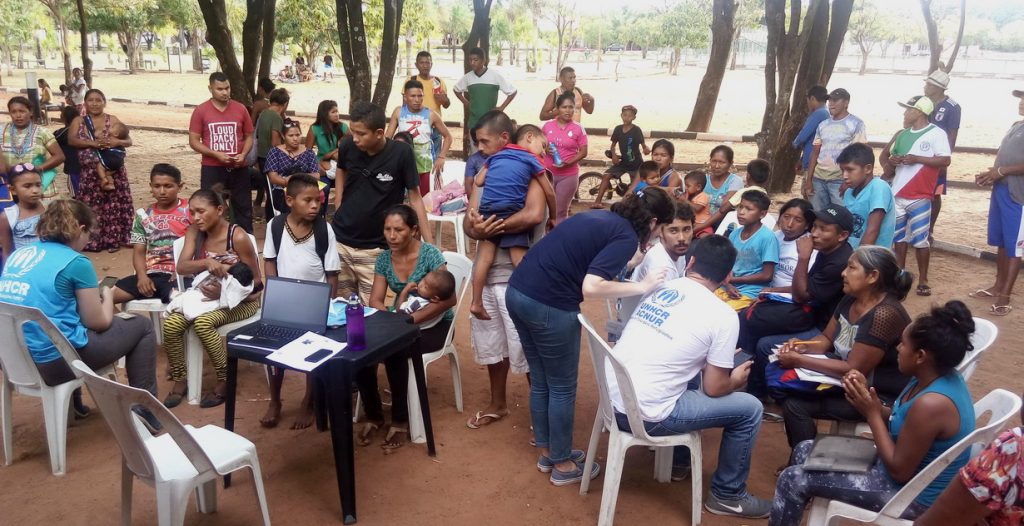
The phenomenon of migration is part of the perspective of globalization, whose topicality and crudeness is before everyone’s eyes. Two closely intertwined sets of causes can be distinguished: causes of “expulsion” (poverty, ethnic, political or religious persecution, etc.) and “attraction” (well-being, ease of work, freedom, etc.). It must not be forgotten that this phenomenon, today, is largely controlled by the underworld, which exploits both migrants and the states where they land.
The Church closely follows the migratory movement, especially through the “Pontifical Council for the Pastoral Care of Migrants and Itinerant People”. The thought of the Magisterium can be found in the Message that the Pope addressed to the participants of the “Fourth World Congress on the Pastoral Care of Migrants and Refugees”, celebrated in Rome from 4 to 9 October 1998. It reaffirms the right of every man to live in his own homeland. There are, however, real and serious causes that push more and more groups to migrate. For this reason, international interventions are needed. They include the need to defend human dignity and promote human development, to support the value of solidarity against the selfish pursuit of profit and to promote political stability and peace. What is at stake is the construction of a new world.
Migration also poses a religious problem, as migrants are both Christians and in greater numbers, non-Christians. The Church cannot remain indifferent. It is necessary to take care of the religious life of Catholic Christian migrants and the evangelization of non-Christians. Certainly this issue is complex because nowadays it is intertwined with human trafficking, creating even more painful reality around it.
In conclusion
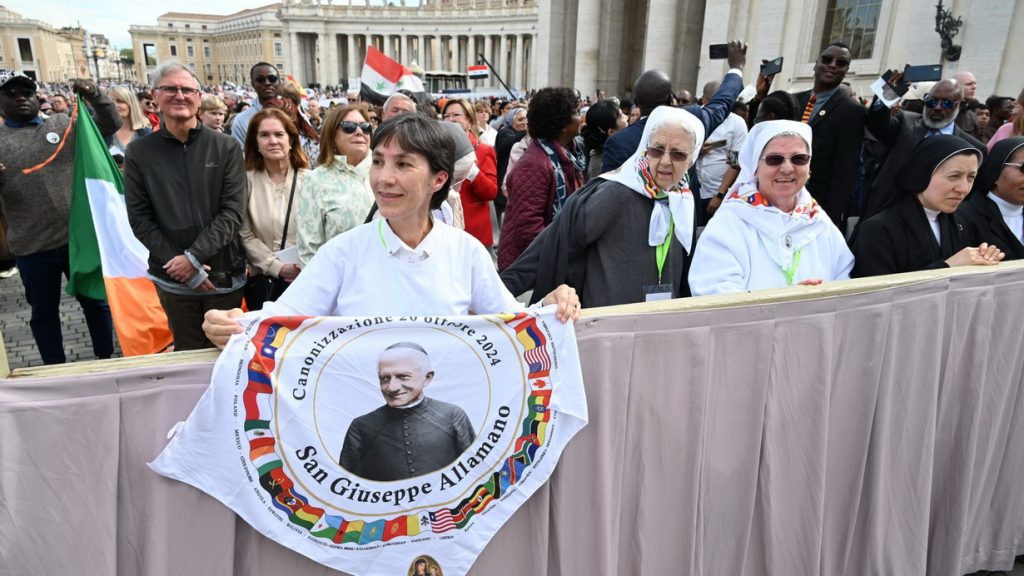
As we celebrate the centenary of the death of our Founder, it is evident that today from heave, St. Joseph Allamano reminds us that all situations of poverty cry out to the mission and the missionaries. We have always been accustomed to taking on the task of helping the poor, by virtue of the precise impulse given by the Founder. Today, however, we need a mentality that is not generic, but targeted. In other words, one which must have its concrete influences both in the preparation of missionaries and in the choice of areas, human groups, and initiatives in which to engage.
Our Consolatine spirituality helps us in this spirit, because we are made to bring “consolation”. From St. Joseph Allamano’s dream, the consolation we offer is the true one, because it is salvation in Christ. It is also integral, because it involves knowing how to see him and help him in the “least” of his own, that is, in the “new poor”.
* Fr. Jonah M. Makau, IMC, Postulation and History Office, Rome