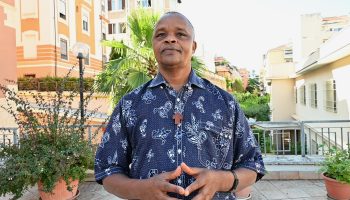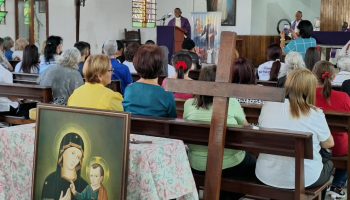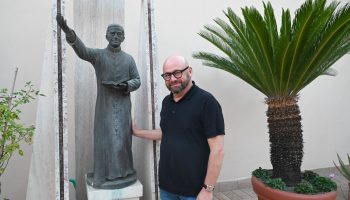
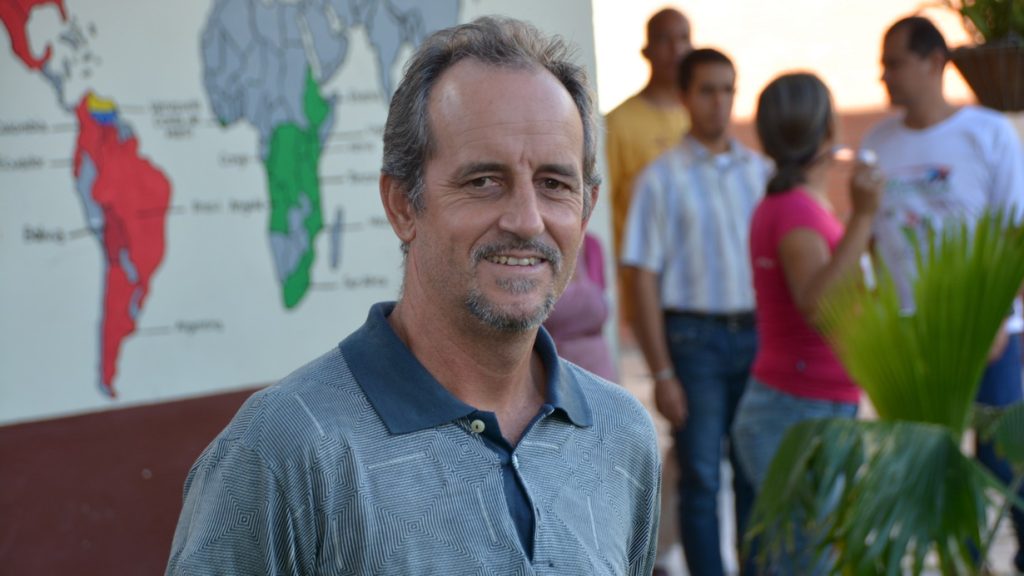
Originally from Atalanta (Santa Catarina), in southern Brazil, Father Vilson Jochem, born on June 16, 1972, is the son of Ernesto and Adir Fontanive Jochem. A Consolata missionary, he has been working in Venezuela for 26 years. In this video, recorded in Rome, he shares his life and mission among the Warao indigenous people in Nabasanuka, on the banks of the Orinoco River, in the state of Delta Amacuro.
By Jaime C. Patias *
“I met the Consolata missionaries in 1986 through Father Dante Possamai, who visited the school I attended. In 1987, I began my formation at the minor seminary in Rio do Oeste (SC), and later attended high school in Erechim (RS). In 1990, I began studying philosophy in Curitiba, Paraná, where I deepened my vocational journey,” Father Vilson recounts.
After completing his philosophy studies, in 1993 he went to Colombia, where he completed his Novitiate in Bucaramanga. “It was my first experience of interculturality when I left my country and had to open my heart and mind to new experiences and ways of living and sharing life.” After making his first religious profession on January 9, 1994, Vilson moved to Bogotá to study theology. There, he met colleagues from Africa, Europe, and Latin America. Living with people from other cultures, he was compelled to set aside personal differences and open himself to the world. “It was an enriching experience,” he recalls. “I am grateful for the presence of Bishop Francisco Múnera, IMC, as my formator, who helped me on this journey of life, faith, and openness to the future with hope, allowing me to take on new responsibilities.”
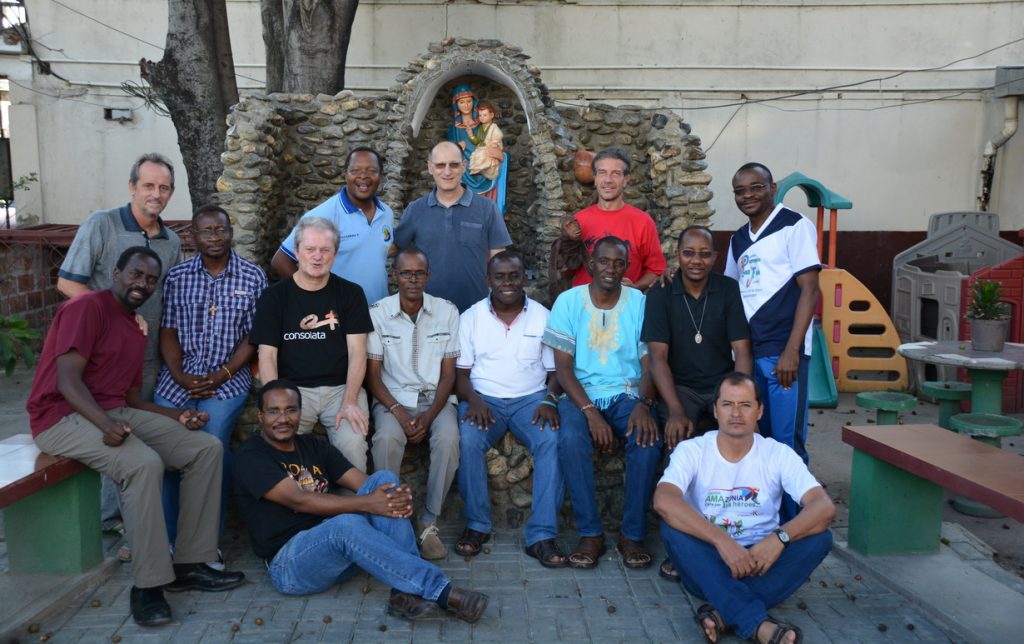
Father Vilson was ordained a priest on October 30, 1999, in the community where he was born and took his first steps in faith. “It was a moment of grace in which I felt part of this Church that sends and opens itself to the missionary world,” he says. Encouraged by this spirit, in 2000 he left Atalanta (SC)—a place that has sent many missionaries around the world—and went to Venezuela, where he has remained ever since. “The small community of origin is an expression of the Church that, by sharing, is enriched by the mission. This recalls the Apostle Paul who, after his journeys, returned to communities to share his experiences and involve them in the mission he lived,” he observes.
In Venezuela, Father Vilson has carried out various services, including animation, administration, formation, pastoral care, and mission ad gentes. In his early years, he focused on missionary and vocational promotion and on integrating into the country’s reality. From 2005 onward, he became involved with the Warao indigenous communities of Delta Amacuro, opening himself to a new world. “I had to learn to recognize God’s presence in a new way. To enrich myself and learn not only to evangelize but also to be evangelized by another culture, seeking to discover how God reveals Himself among the indigenous people.”
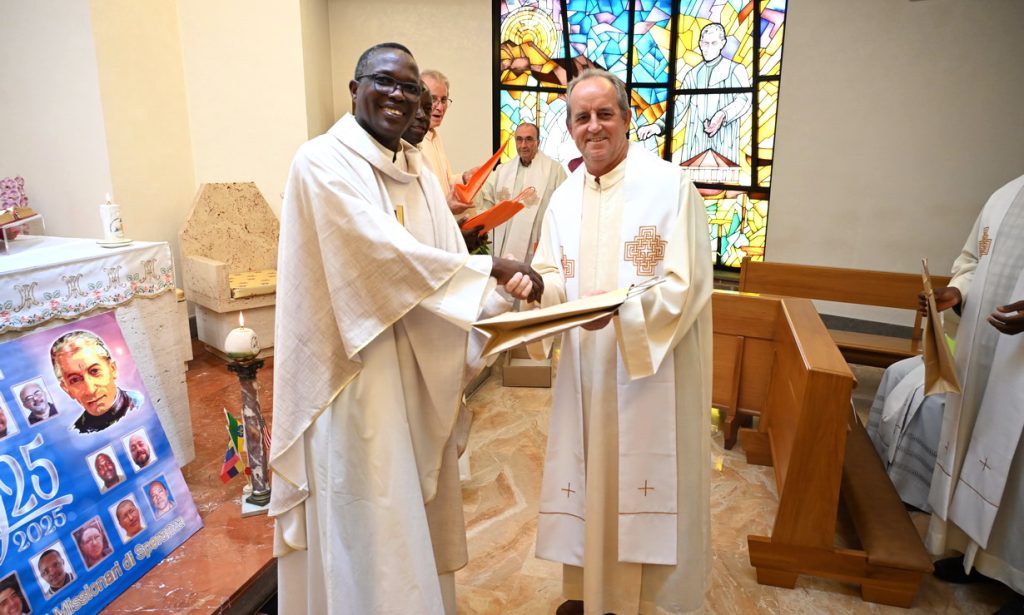
In the Holy Year of Hope 2025 and during his Priestly Jubilee (25th anniversary), despite Venezuela’s serious socio-cultural and economic situation, “we have discovered a people who, amid difficulties, keep hope in God alive, keep faith alive, and maintain the will to continue fighting so as not to lose hope,” Father Vilson testifies. He expresses gratitude for the opportunity to participate in the renewal course organized by the Institute in Rome (May 2025) for missionaries celebrating 25 years of ordination. “Hope is essential in the certainty that the Lord continues to be the protagonist of mission and life. It is He who nourishes in us the certainty that we are not alone.” Within the group, Father Vilson appreciated the richness of the missionary family, made up of confreres from very diverse realities and experiences.
“The richness that the Institute offers us, the richness of Mary Consolata in our journey, continues to encourage and inspire those who will come after us in formation and mission. It is worth believing in the missionary strength of the Church, in the call to discover new challenges with the certainty that the Lord is with us and sends us to be His instruments in building a more humane world, according to God’s dream,” the missionary concludes.
* Father Jaime C. Patias, IMC, Communications Office.