The Path of Peace in a World of Fragmented Wars.
Looking at today’s world, we are confronted with an uncomfortable truth: how much peace has humanity truly known? When we reflect on history, it becomes almost impossible to count days without war. Some scholars even suggest that it is easier to identify moments of true peace than to calculate the absence of conflict. This is not merely a historical observation, but a profound insight into the human condition.
By Father Kyoung Ho Han *
Humanity has not naturally lived in peace; rather, it has continually existed within tensions, divisions, and violence. Within this reality, Pope Francis has described our time as a “piecemeal Third World War.” This expression is not an exaggeration. Today’s conflicts are no longer confined to a single battlefield or region. Instead, they are scattered across the globe, interconnected through political interests, economic systems, ideological tensions, and religious divisions. Together, they form a persistent structure of violence.
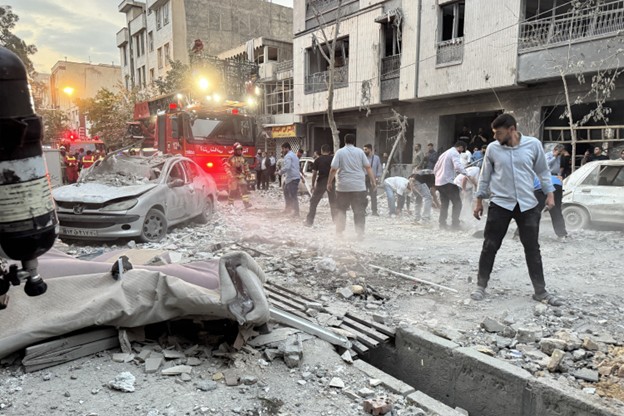
At the center of all this, however, are human lives: families who lose their homes, people forced to flee their land, and countless individuals whose names are never remembered. War is not only about territory; it is about the destruction of human dignity. It breaks relationships, uproots lives, and extinguishes hope.
In the midst of this reality, the Gospel offers a striking word. In Gethsemane, when Peter draws his sword to defend Jesus, the Lord responds: “Put your sword back into its sheath” (Jn 18:11).
This is not simply a moral prohibition against violence. It is a radical call to transform the way humanity confronts evil and seeks change.
Peter acted out of love, attempting to defend his Master. Yet Jesus rejects his action. Violence, even when justified, ultimately perpetuates the very cycle it seeks to end. The sword only calls forth another sword; conflict breeds further conflict.
Yet Jesus does not abandon the struggle. He does not retreat into passivity. He continues to confront injustice, to proclaim truth, and to remain faithful even unto the Cross. The change is not in the commitment, but in the method.
There is no sword in Jesus’ struggle. Instead, there is love, truth, forgiveness, and self-giving. This is what we may call a nonviolent struggle.
Such a struggle is not passive. It demands greater courage and deeper faith. It seeks not to destroy the opponent but to transform the heart. It refuses hatred and chooses love; it rejects revenge and embraces forgiveness.
The Cross reveals the fullness of this path. In the eyes of the world, it appears as a failure. But in the light of faith, it is the deepest victory. Violence can force submission, but only love can bring transformation.
What, then, are we called to do today? This is where the mission of JPIC begins.
To be a peacemaker is not merely to oppose war. It is to speak the truth, to resist the narratives that justify violence, and to stand with those who suffer. It is to choose solidarity over neutrality.
It also means confronting the violence within ourselves – in our words, our judgments, and our attitudes. For the roots of war often begin in the human heart.
Above all, it means refusing to surrender hope. War tells us, “There is no alternative.” The Gospel insists, “There is another way.”
The Church, therefore, is not simply a voice of critique. She is called to be a living sign of peace through prayer, through reconciliation, and through the pursuit of justice.
And so, once again, we hear the words of the Lord: “Put your sword back into its sheath.”
This is not a call to fear, but to courage. To lay down the sword is not to abandon the struggle, but to begin a new one, a struggle that transforms the world through love.
* Father Kyoung Ho Han, IMC, member of the National Reconciliation Commission.