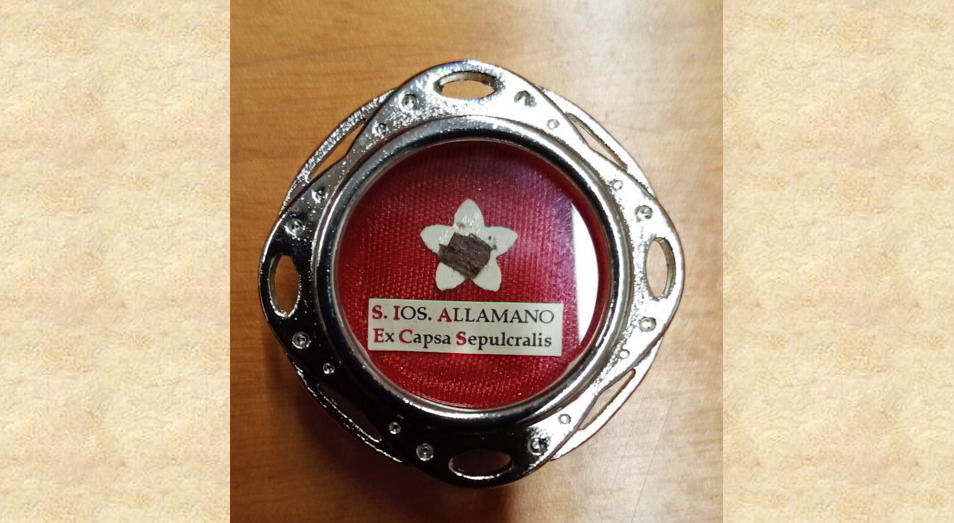
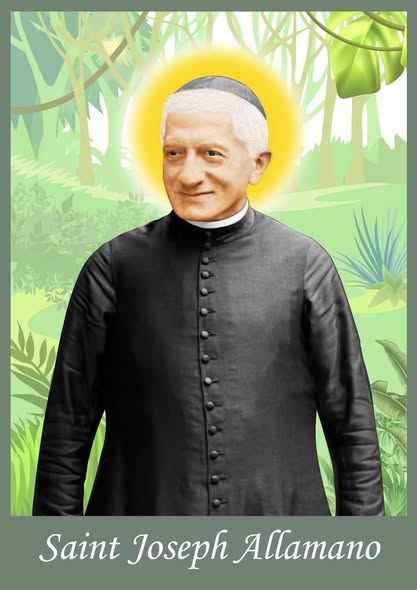
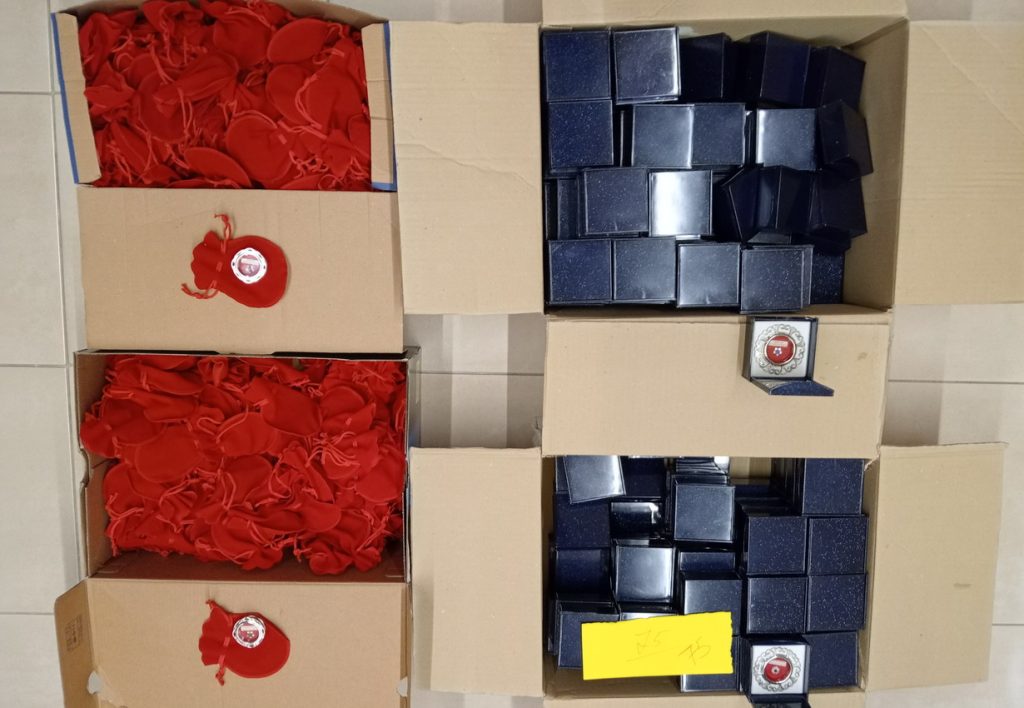
As we start this new year, the year of the centenary of the death of our Founder, St. Joseph Allamano, we are privileged to inform you that we have acquired his relics, after the canonization. The relics will be offer us a chance to feel the presence of our Founder among us.
By Jonah Makau *
But first of all, what are relics? Relics are small fragments of the body, or objects which belonged to, or have come in direct contact with the body, of Blesseds and Saints. They are divided into three classes. First-class relics consist of the bodily remains of saints. Second-class relics are personal belongings of saints, such as articles of clothing, or the instruments used in the torture and death of martyrs. Third-class relics are any objects which have come into physical contact with first- or second-class relics. In truth however, the terminology of the classification of the relics has changed.
In 2017, the Congregation for the Causes of Saints abolished relics of the third degree, introducing a two-stage scale of classification of relics: significant (insigni) and non-significant (non insigni) relics. The first category includes the bodies or their significant parts, as well as the entire contents of the urn with the ashes preserved after cremation. The second includes small fragments of the bodies, as well as objects used by saints and blesseds. Many people however, continue using the old terminology of the classification of relics.
While no Catholic is compelled to venerate any particular relic (and one shouldn’t if one has doubts as to its authenticity), the Church always has maintained that the veneration of relics is proper. Harkening back to the eighth-century iconoclastic controversy and the seventh ecumenical council at Nicaea (787), the Council of Trent maintained against the Reformers that the honour given to a relic, statue, or icon was honour not to an object (fetishism and idolatry), but to the person it represented. Latria (Greek: worship) must be given to God alone, whereas dulia (Greek: veneration or respect) may be given to holy people or articles.
The critic who compares the veneration of relics to magic fails to comprehend either magic or the veneration of relics. Magic employs material objects in order to cause a supernatural effect through demonic forces. Using relics doesn’t compel God to act in a certain way. Miraculous events associated with relics are simply cases in which God, according to his sovereign will, uses the mementos of Christ and his saints as conduits of grace. Nothing could be more scriptural. Luke 6:18-19 tells us, “Those troubled by evil spirits were cured, and the people all tried to touch him [Jesus], because power was coming from him and healing them all.” This power is again referred to in Luke 8:40-48, where the woman who touches the tassel of Jesus’ shawl is healed of the haemorrhage she had endured for twelve years.
According to Mosaic Law, menstruating women were considered ritually unclean (Lev. 15:25-30). Rabbinical law later included haemorrhaging women in this category, and everything such a woman touched was considered defiled. Thus, the haemorrhaging woman in Luke 8:40-48 doesn’t try to touch Jesus himself, but tries secretly (“from behind”) to touch a tassel on his prayer shawl.
Was the haemorrhaging woman in Luke 8:40-48 guilty of superstition or fetishism? No, there is none of that, nor did Jesus’ cloak have any magical effect. Because of the woman’s faith, the cloak was the conduit of the grace which came directly from Jesus. Jesus tells us as much in Luke 8:46, where he responds to the woman’s touch: “Someone has touched me; I know that power has gone out from me.”
We also learn from Scripture that not only power, but holiness could be transmitted through contact, even through articles of clothing. In the prophet Ezekiel’s vision of the ideal Temple, regulations are given for the attire of priests: “When the priests go out into the outer court where the people are, they are to take off the clothes they have been ministering in and are to leave them in the sacred rooms and put on other clothes, so that they do not consecrate the people by means of their garments” (Ezek. 44:19). Later on, Ezekiel is shown special rooms in the Temple and is told, “This is the place where the priests will cook the guilt offering and the sin offering and bake the grain offering, to avoid bringing them into the outer court and consecrating the people” (Ezek. 46:20).
In the Gospel of Matthew we read that the people of Gennesaret brought all their sick to Jesus and “begged him to let the sick just touch the edge of his cloak, and all who touched it were healed” (Matt. 14:35-36). Here again Jesus’ garment is used as a conduit of the power of God. It doesn’t seem likely that Jesus would reinforce “superstition” by allowing these people to be healed by touching the fringe of his garment if such an action were truly superstitious.
The same idea is probably behind 2 Kings 2:13-14. The prophet Elisha has just watched his teacher, Elijah, being taken into heaven in a flying chariot and notices that Elijah’s cloak or mantle had fallen to the ground. In an act of succession to prophetic leadership, Elisha picks up the mantle and dons it himself. He then goes to the Jordan and, calling on “the God of Elijah,” strikes the water with the mantle, and it immediately parts for him to cross over. The power of God was conveyed through a relic of a departed saint.
We find similar phenomena in Acts 5:15-16. The people of Jerusalem bring out the sick and those tormented by evil spirits and lay them in the street “that at least Peter’s shadow might fall on them as he passed by. Crowds gathered also from around Jerusalem . . . and all of them were healed.” In Acts 19:11-12 the grace that God gave to Paul was directed through the items, specifically handkerchiefs and aprons, that came into contact with him. Later on in Church history, a custom arose of going to Paul’s grave and lowering handkerchiefs into his tomb on a string so they could touch his remains, making them third-class relics. In both Acts 5:15-16 and Acts 19:11-12 we see the power of God being conveyed through items associated with the apostles.
While the Israelites were wandering in the desert, the Lord fed them by dropping bread-like manna on the ground at night. In Exodus 16:33 Moses instructs Aaron to place a jar of manna inside the Ark of the Covenant. Later on, in Exodus 40:20 (cf. Ex. 25:16, 21, Deut. 10:1-5), the Decalogue is placed in the Ark as well. To complete the list, Hebrews 9:4 adds Aaron’s rod to the items placed in the Ark. In essence the Ark, the holiest object in Israel, was a large, portable reliquary!
Not only were items associated with the saints used by God as conduits of grace, but the saints’ physical remains were used by God as well. In 2 Kings 13:20-21 we read that, after the prophet Elisha had died, “while some Israelites were burying a man, suddenly they saw a band of raiders so they threw the man’s body into Elisha’s tomb. When the body touched Elisha’s bones, the man came to life and stood up on his feet.” Hardly a more dramatic example of the power of God working through relics could be imagined! It is on this note we receive the relics of our Founder with jubilation, knowing that they are instruments through which God may do marvellous things in our life. May the almighty God through the intercession of St. Joseph Allamano give us a fruitful new year 2026.
* Fr. Jonah Makau, IMC, Postulation and History Office, Rome.