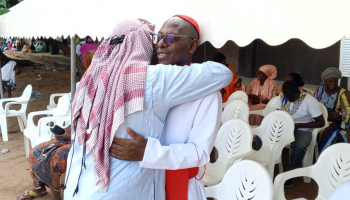
Recognition and Welcome of the Other. The Case of the Community in the Diocese of Djibouti
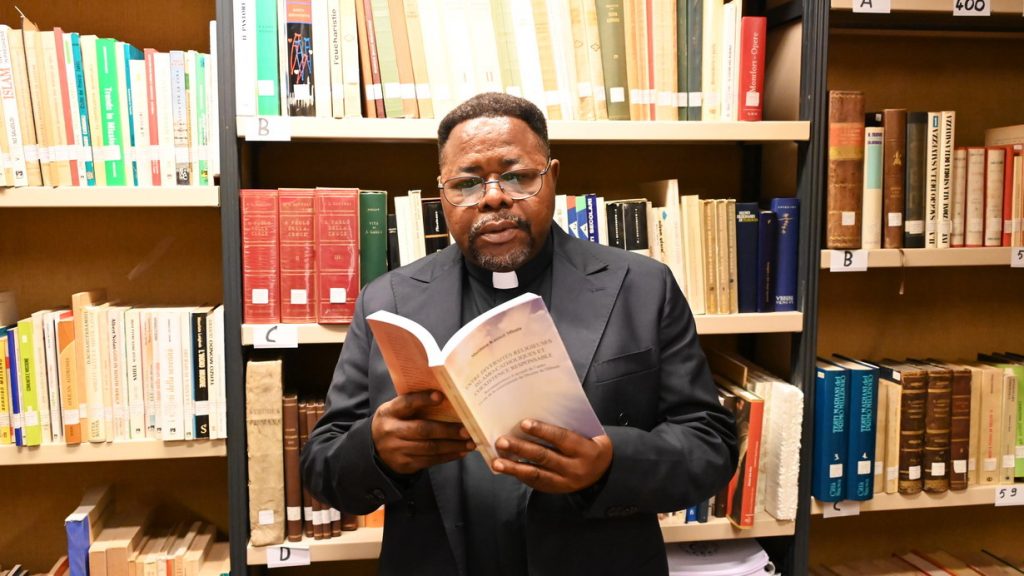
“This book is the result of research on religious diversity, an essential reality in contemporary societies. In the era of globalization and migration, the plurality of religions and cultures presents challenges to peaceful coexistence, which must be based on respect, tolerance, mutual recognition of differences, and the welcoming of one another,” explains the Congolese Consolata missionary, Father Matthieu Kasinzi Mbuta, who holds a degree in Arabic and Islamic Studies from the Pontifical Institute for Arabic and Islamic Studies (PISAI) in Rome, and a doctorate in Theology from the Pontifical University of St. Thomas Aquinas (Angelicum).
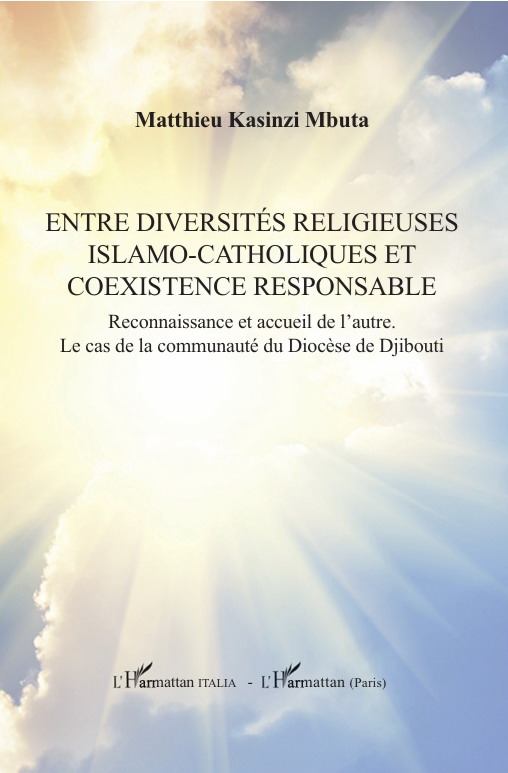
“However, the simple fact of living side by side,” Father Kasinzi continues, “often does not foster dialogue but generates tensions and endless conflicts. The notion of pro-existence calls for a more active and supportive commitment among the various religious traditions. It values positive otherness, attentiveness and cooperation in the service of the common good, the promotion of interreligious and intercultural dialogue, responsible living together on the part of each person, and the building of lasting peace,” the missionary emphasizes in the presentation of his book titled “Between Islamic–Catholic Religious Diversity and Responsible Coexistence.”
The publication in French (L’Harmattan Publishing – Italy and Paris, 2025) is the result of his doctoral thesis, completed in Rome in 2018, and is based on his experience and pastoral work in the community of the Diocese of Djibouti.
Father Matthieu Kasinzi, who has lived significant experiences in the field of interreligious dialogue in several African countries—such as Ethiopia, Egypt, Djibouti, and the Democratic Republic of Congo—argues that “religious diversity, far from being a threat or a source of division, can become a lever for social cohesion and mutual enrichment in contemporary pluralistic societies.”
In this sense, the book offers an important contribution to academic study and pastoral practice on interreligious dialogue within the context of religious and cultural diversity in a world where intolerance, fundamentalism, and nationalism are on the rise.
* Communications Office.