Born in Manaus, in the Brazilian Amazon, in 1988, young Ronildo de França Pinto entered the Seminary of the Consolata Missionaries to study philosophy and continue his formation up to priestly ordination, which took place on November 25, 2000, at the hands of Bishop Carilio Gritti, Bishop of the Prelature of Itacoatiara (AM).
By Jaime C. Patias *
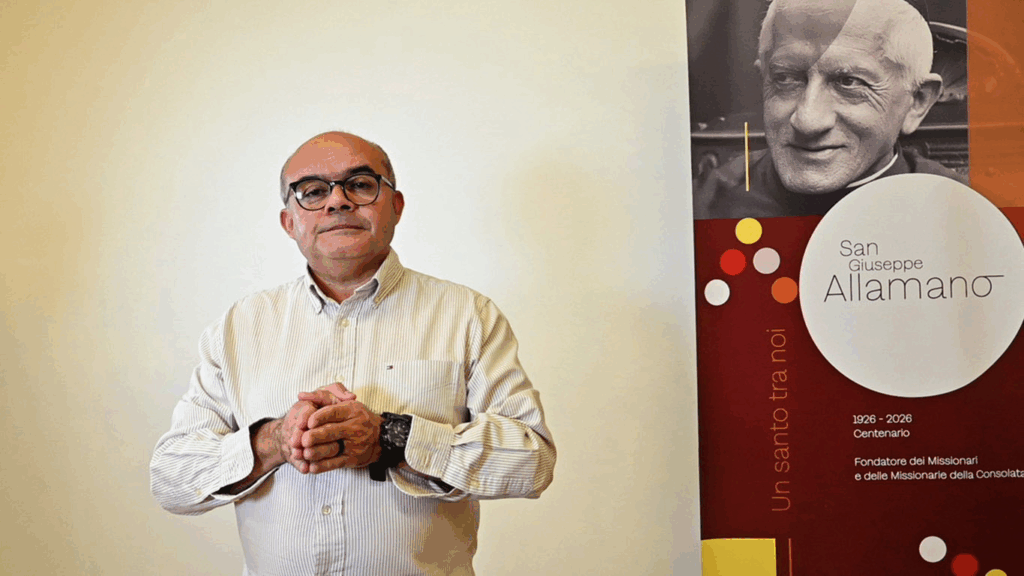
“I grew up in a missionary parish in Manaus, but it was run by PIME missionaries. I met the Consolata missionaries in Santa Luzia” (on the outskirts of Manaus) through a bishop, recounts Father Ronildo de França as he shares his story in this video, recorded in Rome in May 2025 during an ongoing formation course. The missionary, who celebrates his priestly Jubilee on November 25, leaves a message of hope.
Today, Father Ronildo works at the parish of St. Paul in Cascavel, Paraná, but he has already served in missions in Mozambique, Mexico, Rio de Janeiro, and Roraima.
“I did my novitiate in Colombia and my theological studies in Spain. Then I left for Mozambique, where I completed two years of pastoral internship. After returning to Brazil, I continued my theological studies at the Padre Bisio Seminary in São Paulo until my ordination,” explains the religious, who professed perpetual vows in October 1999. After meeting the Consolata missionaries, his dream was to work in Africa. “I had the opportunity to spend two years in Cuamba, Niassa Province, northern Mozambique, with a colleague, Carlos Caxide, and Father Salvatore Forner. It was an unforgettable experience. I also had the opportunity to meet Father Giuseppe Frizzi in Maua (an Italian missionary dedicated to studying the culture of the Macua people in a project of Gospel inculturation). The dream was to return to Africa one day, which never came to pass, but I still dream about it,” the priest reveals.
After his ordination, Father Ronildo went to work in Roraima at the Surumu mission, in the Raposa Serra do Sol Indigenous Territory (TIRSS), at a very critical moment due to the struggle for land demarcation and the removal of invading fazendeiros. “The demarcation took place in 2005. The mission was invaded and destroyed by some fazendeiros and by certain (co-opted) Indigenous leaders and regional politicians. I was kidnapped along with two colleagues, Brother João Carlos, a Spaniard now deceased, and Colombian Father César Avellaneda,” recalls Father Ronildo.
He later went to work in Rio de Janeiro, in the Mangueira favela, in the Benfica neighborhood, at Our Lady of Consolata Parish, and in 2008 he was sent to Mexico to be part of the first group of Consolata missionaries in that country. “This was a rewarding and also challenging experience, as it meant starting a mission in a new country,” he comments. He spent seven years there. In 2015 he returned to Brazil and worked for six years at the Most Holy Trinity Parish in Feira de Santana, Bahia, a region where the Institute had been present since 1985. Today, while celebrating his 25th anniversary of ordination, Father Ronildo is a missionary at St. Paul Parish in Cascavel (PR).
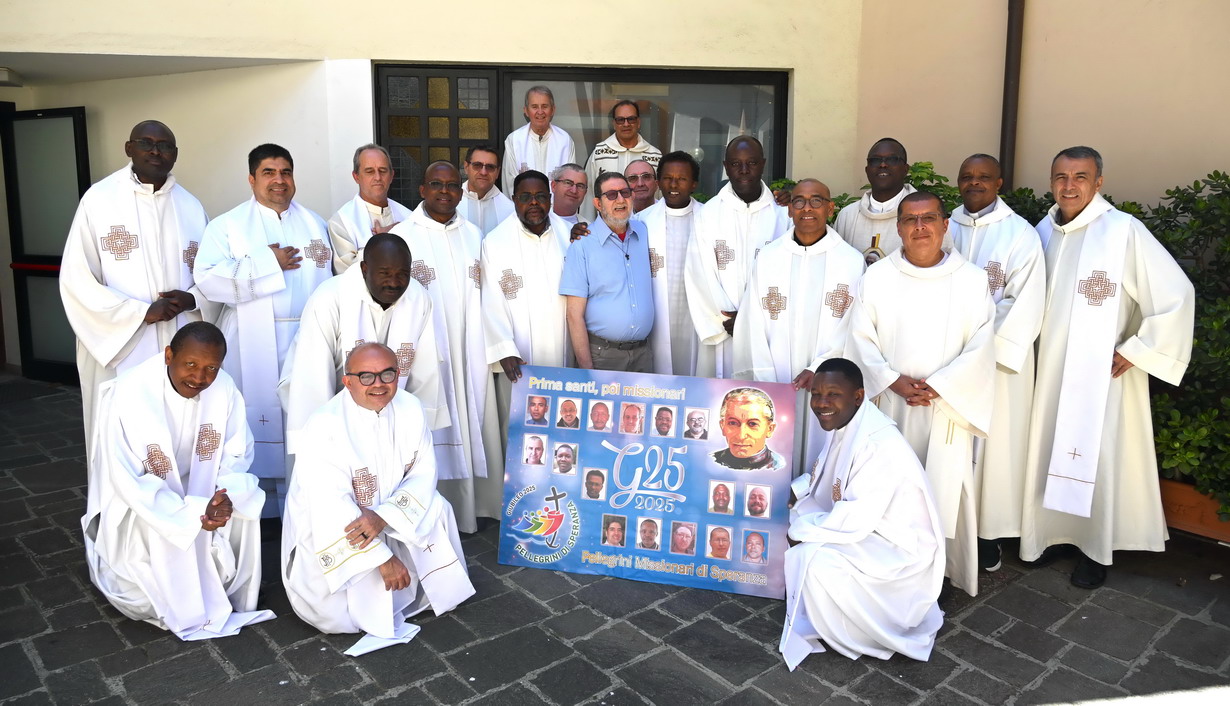
“I want to thank God for granting me this pause after 25 years of mission work, to reflect on the path I have taken. I also want to look to the future with hope and the desire to continue serving the Institute, the mission, and Jesus Christ. He still has much to ask of us and wants us to be people capable of giving our lives; we middle-aged people still have much to offer. So I ask for prayers, and that others may feel the desire to serve the Lord. Sometimes people are trapped by their culture, their family, their circumstances, and they don’t look beyond or toward the other possibilities God offers. The world is much bigger than our lives and the places we find ourselves in. We can gain so much by getting to know other cultures, languages, and people… My hope is to be able to offer much more to the mission, even though it is not easy, but God counts on us,” he concludes.
* Father Jaime C. Patias, IMC, Communications Office.