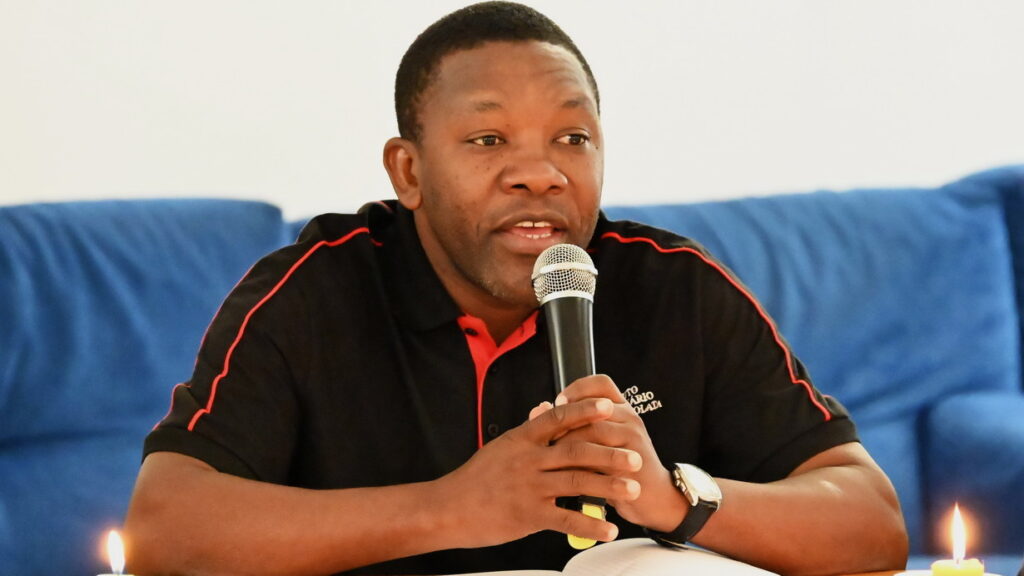
“Mecanhelas is synonymous with the Consolata Missionaries. It is an environment of faith marked by missionary spirituality and devotion to Our Lady Consolata,” explains Father Cassiano Remigio Jonas Gabriel Kalima, IMC, speaking of his origins in the province of Niassa, in northern Mozambique.
By Jaime C. Patias *
It was there that he was born, on October 4, 1973, and ordained a priest on September 7, 2003. He worked as a missionary in South Africa as a formator, and upon returning to his homeland, he devoted himself to education and pastoral ministry. Today, Father Cassiano serves as the Superior of the Mozambique-Angola Region.
“My father and mother were also missionaries. My father attended Anchilo, the Catechist Training Center in Nampula, which gave him the foundations for his ad gentes vocation,” he recounts in the video published below.
The journey of the young Macua man from Mecanhelas within the Institute began in Maputo in 1992, where he studied philosophy for three years, followed by a year of novitiate, during which he made his first religious vows in 1997. He then went to Rome to study theology, made his perpetual vows, and was ordained a deacon in 2002. He returned to Mecanhelas for his priestly ordination in 2003.
On January 1, 2004, the young missionary was already in Damonfontein, South Africa. “There, I began by learning the language and everything required for inculturation and integration into the missionary context,” Father Cassiano explains. “It was an experience that lasted two years, interrupted at the request of my superiors, who sent me to Rome to attend a course at the Interdisciplinary Center for Seminary Formators (2006–2008). At the same time, I served as formator at the theological seminary in Bravetta.”
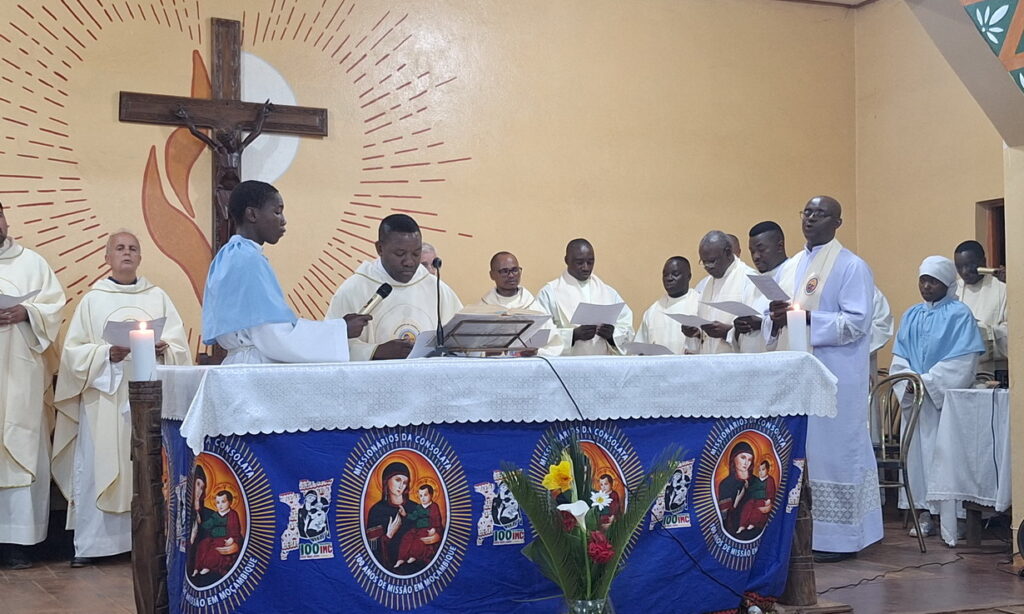
In 2008, he returned to South Africa to establish the Merrivale formation community with a group of six theology students. The entire work of formation lasted eight years, until 2016, when Father Cassiano returned to his homeland in Nampula, Mozambique, to direct the Consolata School until 2020. “It was a work of education and consolidation of what the first missionaries planted and bore witness to.”
Another stage in Father Cassiano’s mission was the Spirituality Center in the Laulane neighborhood of Maputo, formerly the novitiate house – “a very rich experience of service,” as he describes it – until his election as Regional Superior in June 2025.
“I consider my ten years as a formator a moment of grace, because it is about accompanying young people who feel called – though fragile – yet possessing elements of strength to be developed. The fact of being able to listen to their dreams and frustrations and help transform them into something positive, so that they can continue walking in their vocation, is something to highlight,” he says. “Also, the openness of the formator – being willing to grow and learn with them – is another secret in formation, a useful tool to accompany them in daily life and all their activities.”
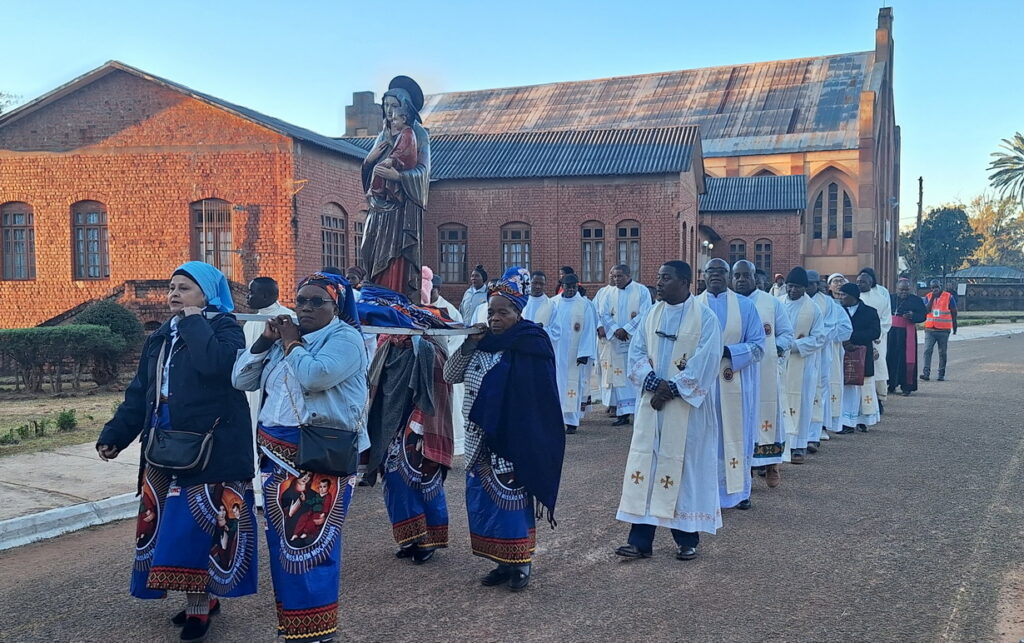
Father Cassiano sees the celebration of his Jubilee of Religious Profession as “a privileged moment, coinciding with the Jubilee of Hope that the Church celebrates throughout the world. Mozambique is a martyred Church, yet this element of hope has never been lacking. The people hope every day. The martyred Church lives this aspect of hope that is not something empty – it is the hope in Jesus Christ that keeps us firm in our life, which is a pilgrimage.”
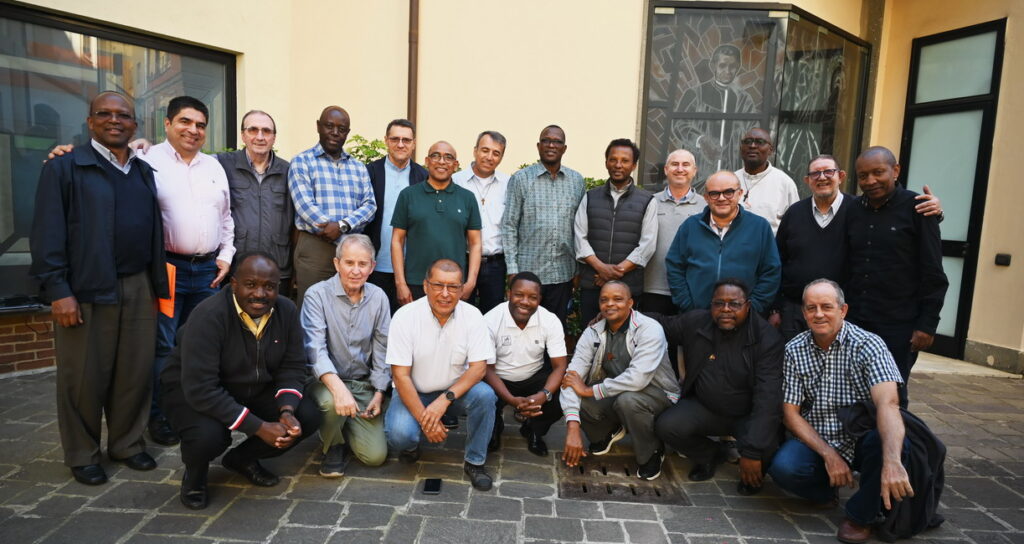
According to Father Cassiano, the renewal course he attended in Rome (May 2025) left a powerful message: “Never stop; keep moving forward. Difficulties are part of missionary life. We must return to the initial enthusiasm and go back to Jesus Christ – start from Him and return to Him. This is the strong message I also share with young people, those who have a docile heart ready for total dedication to Jesus. He is the model; He is the one who calls, forms, and finally sends us. It is worth betting one’s life on Jesus Christ,” concludes Father Cassiano.
The Consolata Missionaries arrived in Mozambique on October 30, 1925 – exactly 100 years ago. During this centenary, they have established themselves in various dioceses, beginning in Niassa, then Inhambane, later Maputo, followed by Nampula, and more recently Tete – offering pastoral, educational, social, university, human development, and Christian formation services. They have also contributed to the formation of diocesan priests and religious, as a fruit of evangelization.
* Father Jaime C. Patias, IMC, Communications Office.